
Diaphorus
Meigen, 1824
Species Guides
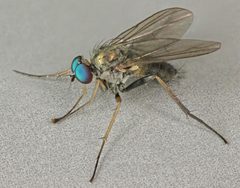
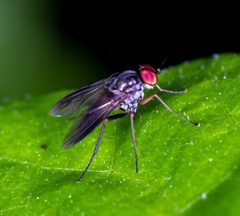
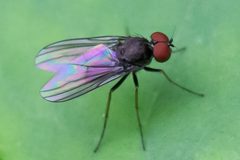
2Diaphorus is a of long-legged flies (Dolichopodidae) established by Meigen in 1824. The genus has undergone significant taxonomic revision, with many former transferred to related genera including Chrysotus, Asyndetus, and Trigonocera. Recent taxonomic work has described new species from China and clarified species boundaries. The genus is placed in the Diaphorinae.
Pronunciation
How to pronounce Diaphorus: //daɪˈæfərəs//
These audio files are automatically generated. While they are not always 100% accurate, they are a good starting point.
Identification
Diaphorus can be distinguished from the closely related Chrysotus by subtle morphological characters of the male genitalia and leg chaetotaxy; historically, Lyroneurus was treated as a subgenus of Diaphorus but is now recognized as distinct or synonymized with Chrysotus. Species-level identification requires examination of male terminalia and is supported by recent keys for regional faunas such as the Chinese mainland.
Images
Distribution
Recorded from the Chinese mainland (Guangdong, Yunnan provinces), with additional distribution records from Denmark, Norway, and Sweden. The has a broader distribution across the Palaearctic and Oriental regions, though precise range boundaries require further documentation.
Similar Taxa
- ChrysotusFormerly included now placed here; Lyroneurus historically treated as subgenus of Diaphorus now synonymized with or distinct from Chrysotus. Separation requires examination of male genitalia structure and leg bristle patterns.
- AsyndetusDiaphorus latifrons transferred to this ; similar body plan and preferences necessitate careful morphological comparison.
- TrigonoceraDiaphorus munroi and D. tongshiensis transferred here; distinguished by wing venation and male terminalia characters.
More Details
Taxonomic instability
The has experienced extensive revision, with over 20 transferred to other genera since the mid-20th century. This reflects ongoing challenges in defining generic limits within Diaphorinae based on homoplastic characters.
Fossil record
Two fossil have been reassigned: Diaphorus tertiarius moved to Palaeomedeterus, and D. venustus remains unplaced within Dolichopodidae.
Recent species descriptions
Four were described from China in 2006: D. guangdongensis, D. jinghongensis, D. longiseta, and D. ruiliensis, expanding known morphological diversity in the .