
Diaphorinae
Schiner, 1864
Genus Guides
6Diaphorinae is a of long-legged flies (Diptera: Dolichopodidae) characterized by high taxonomic diversity but imprecisely defined boundaries. Some researchers include such as Nematoproctus and Urodolichus within Diaphorinae, while others assign these to related subfamilies Rhaphiinae or Sympycninae. The subfamily contains two recognized tribes: Diaphorini and Argyrini. Members are distinguished by elongated legs and typically metallic coloration common to the Dolichopodidae.
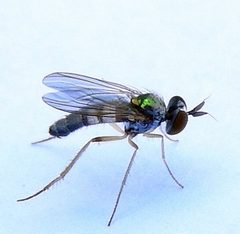
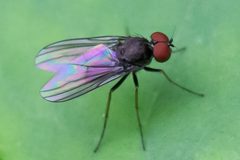
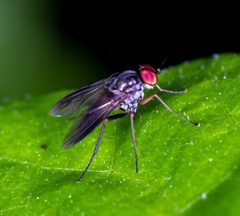
Pronunciation
How to pronounce Diaphorinae: //ˌdaɪ.ə.fɔːˈraɪ.niː//
These audio files are automatically generated. While they are not always 100% accurate, they are a good starting point.
Identification
Diaphorinae can be distinguished from other Dolichopodidae by combinations of genitalic and leg chaetotaxy characters, though specific diagnostic features vary among constituent . The tribes Diaphorini and Argyrini are separated by differences in wing venation and male genitalia structure. Genera with uncertain placement (Nematoproctus, Nurteria, Urodolichus) require examination of specific morphological traits to determine subfamily affiliation.
Images
Distribution
Worldwide distribution corresponding to that of Dolichopodidae, with constituent occurring across multiple biogeographic regions. Specific distribution records include: Argyra (widespread), Chrysotus (Holarctic and Neotropical), Diaphorus (), and Asyndetus (cosmopolitan).
Similar Taxa
- Rhaphiinae Nematoproctus and Urodolichus have been alternatively placed in Rhaphiinae by some researchers rather than Diaphorinae, indicating close morphological similarity and taxonomic boundary uncertainty between these .
- Sympycninae Nurteria has been referred to Sympycninae by some authorities rather than retained in Diaphorinae, reflecting overlapping diagnostic characters and disputed limits.
Sources and further reading
- BugGuide
- Wikipedia
- iNaturalist taxon
- NCBI Taxonomy
- Catalogue of Life
- Publications | Entomology Research Museum
- Taxonomic Notes onPsyllaphycus diaphorinae(Hymenoptera: Encyrtidae) And its Host Associations in Pakistan
- New host record of <i>Psyllaphycus diaphorinae</i> Hayat, 1972 from Pakistan
- Candidatus Kirkpatrickella diaphorinae gen. nov., sp. nov., an uncultured endosymbiont identified in a population of Diaphorina citri from Hawaii
- Threshold Temperatures and Thermal Requirements of Psyllaphycus diaphorinae (Hymenoptera: Encyrtidae), a Hyperparasitoid of Diaphorencyrtus aligarhensis (Hymenoptera: Encyrtidae) and Tamarixia radiata (Hymenoptera: Eulophidae)
- Biology ofPsyllaphycus diaphorinae(Hymenoptera: Encyrtidae), a Hyperparasitoid ofDiaphorencyrtus aligarhensis(Hymenoptera: Encyrtidae) andTamarixia radiata(Hymenoptera: Eulophidae)