
Asyndetus
Loew, 1869
Species Guides
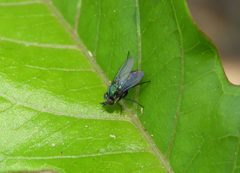
8Asyndetus is a large of long-legged flies in the Dolichopodidae, containing over 100 described with worldwide distribution. The genus was established by Loew in 1869. Species occur across diverse biogeographic regions including the West Indies, the Palaearctic, and Scandinavia. Several species have been subject to taxonomic revision, with numerous synonymizations and transfers to other genera.
Pronunciation
How to pronounce Asyndetus: /æsɪnˈdɛtəs/
These audio files are automatically generated. While they are not always 100% accurate, they are a good starting point.
Identification
Identification of Asyndetus relies on male genitalic characters and secondary sexual features. Diagnostic characters include details of the , which in some species are partly sclerotized and -like—a rare condition in brachyceran Diptera. Other key features include the structure of abdominal sternite 5 (some Palaearctic species bear two combs of long black bristles), wing venation patterns such as the condition of M1+2 and presence of vein dm-m, and tarsal claw number. Species-level identification requires examination of and reference to published keys.
Images
Habitat
associations are poorly documented at the level. One , Asyndetus longicornis, has been recorded from mangrove habitats in Iran. Many species appear to occupy coastal and insular environments, as evidenced by concentration of species in the West Indies and other island systems.
Distribution
distribution with records from the West Indies (Greater Antilles, Lesser Antilles, Bahamas), the Palaearctic Region including Iran and neighbouring countries, and Scandinavia (Denmark, Norway, Sweden). The shows particular diversity on Caribbean islands.
Similar Taxa
- CryptophlepsThree formerly placed in Asyndetus (A. izius, A. minutus, A. vividus) were transferred to Cryptophleps based on revised generic concepts, indicating close morphological similarity requiring careful examination of diagnostic characters.
More Details
Taxonomic history
The has undergone extensive revision. Notable synonymizations include the consolidation of multiple (A. deficiens, A. dominicensis, A. exiguus, A. currani) under A. fratellus in the West Indies. Previous reports of A. syntormoides from the West Indies have been determined to be erroneous. A preoccupied species name (A. tibialis De Meijere, 1916) was renamed to A. semarangensis.
Sources and further reading
- BugGuide
- Wikipedia
- GBIF taxonomy match
- iNaturalist taxon
- NCBI Taxonomy
- Catalogue of Life
- Review of West Indian Asyndetus Loew (Diptera: Dolichopodidae), with descriptions of five new species
- A review of the genus Asyndetus Loew, 1869 (Diptera: Dolichopodidae) from Iran and neighbouring countries with the description of three new species