Atelestidae
Hennig, 1970
Genus Guides
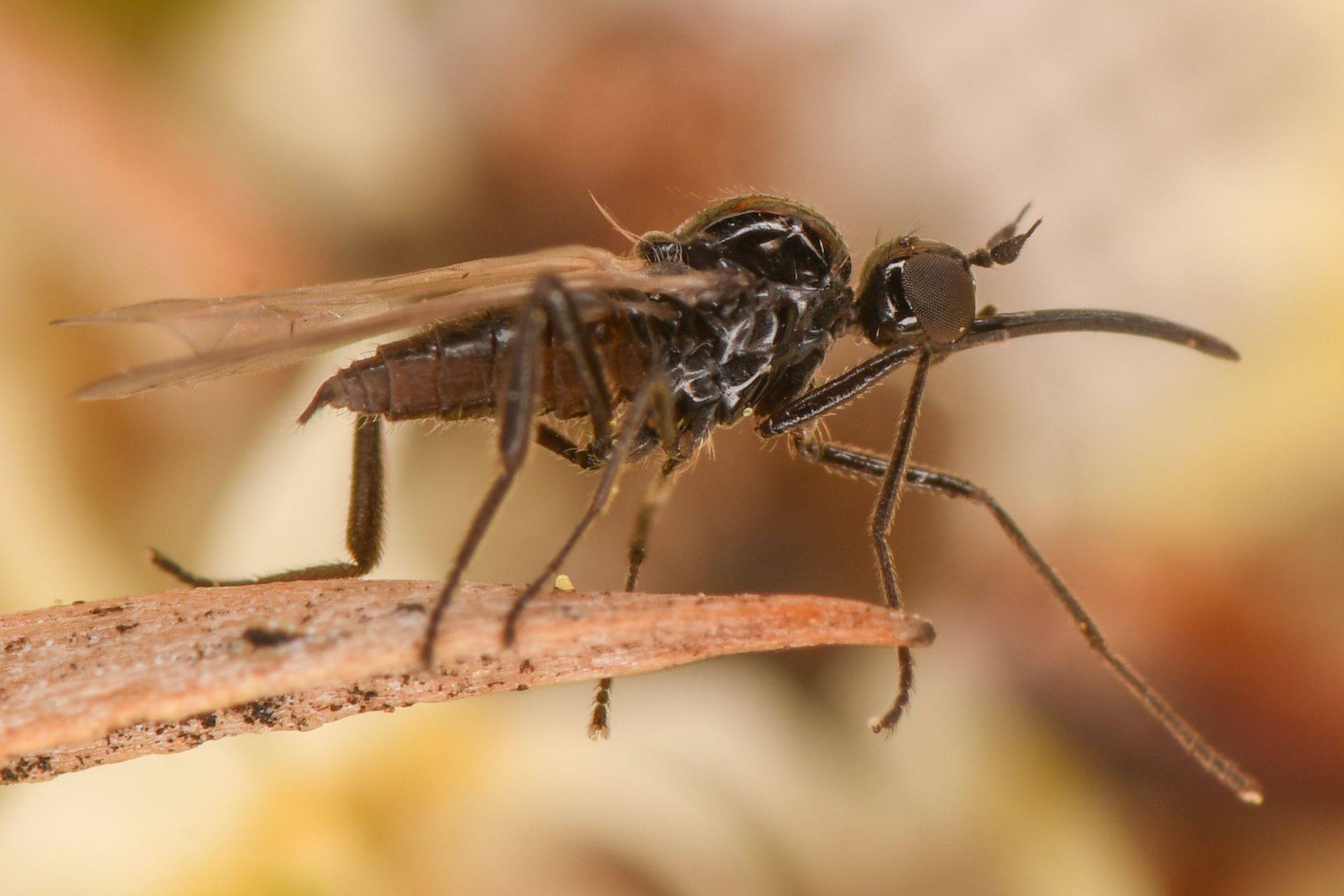
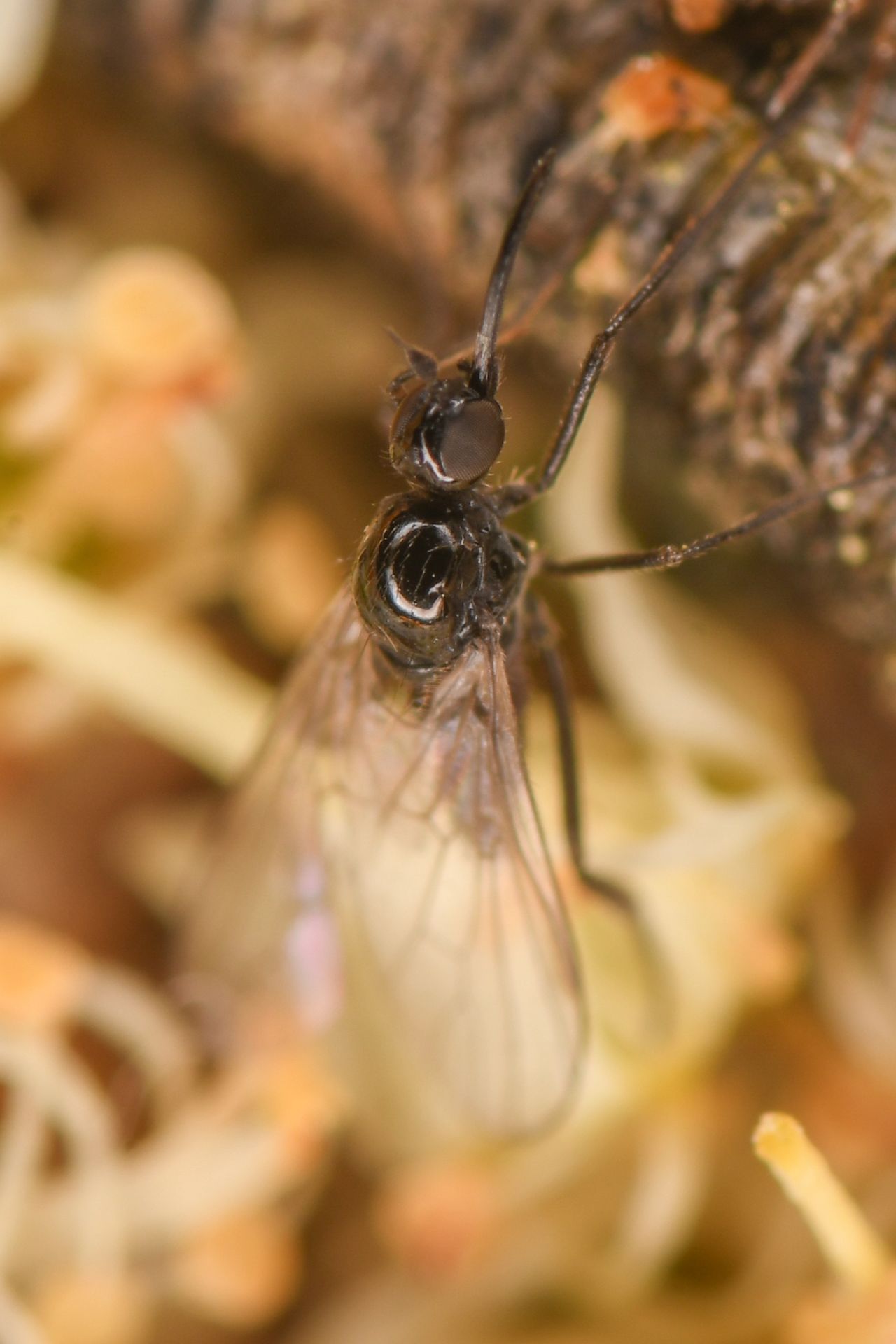
1Atelestidae is a small of flies in the superfamily Empidoidea, comprising approximately four extant . The family was formally established in 1983, having previously been classified within Platypezidae or as incertae sedis. Phylogenetic studies indicate Atelestidae represents the sister group to all other living Empidoidea, making it the most basal lineage of this diverse superfamily. The family includes both extant and fossil , with the genus Alavesia known from Cretaceous amber and discovered alive in Namibia in 2010. The monophyly of the family remains incompletely resolved, with the genus Meghyperus likely requiring taxonomic revision.
Pronunciation
How to pronounce Atelestidae: /ˌætəˈlɛstɪdiː/
These audio files are automatically generated. While they are not always 100% accurate, they are a good starting point.
Identification
Distinguished from Empididae by the separated and proepisternum ( in Empididae). Separated from Ragadidae by the ending at or near M1+2 (Ragadidae have costa extending further). The wing venation character—origin of Rs distant from humeral crossvein by at least the length of h—is shared with Empididae and Ragadidae but combined with the other characters permits -level identification. Small size (2–3 mm) and greyish-dusted appearance are consistent field characters.
Images
Appearance
Small flies, 2–3 mm in length, with greyish-dusted bodies. Wings with triangular shape and broad base in some . Male terminalia symmetrical without . Wing venation diagnostic: origin of Rs (radial sector) positioned at a distance from humeral crossvein (h) equal to or longer than the length of h. ends at or near the first and second medial vein (M1+2). separated from proepisternum. Some males exhibit highly modified with prolonged third segment of stylus bearing long-oval pennons, and elongated blade- or ribbon-shaped palps.
Habitat
Extant occur in diverse terrestrial including pasture, pine woodland, meadow, cork oak forest, and oak forest. Collections have been made by sweeping vegetation and using yellow and white water pan traps at elevations ranging from 37 to 1200 meters. Fossil are known from amber deposits indicating ancient forest .
Distribution
Disjunct distribution with extant in the Holarctic region (Europe, Turkey, Russia, North America) and southern Neotropical region (Chile, Namibia, Brazil). European records include Spain, Portugal, France, Germany, Czech Republic, Slovakia, Hungary, Finland, Bulgaria, and Denmark. The has a significant fossil record from Cretaceous and Tertiary ambers including Burmese, Lebanese, Canadian, New Jersey, Baltic, and Spanish deposits.
Behavior
Males of some engage in elaborate involving hovering to present modified with pennons to females. The triangular wing shape with broad base in these species appears adapted for this hovering . Possible behavior has been suggested for some fossil species based on morphological interpretation.
Human Relevance
Of primary interest to dipteran systematists due to the 's basal phylogenetic position within Empidoidea. The 2010 discovery of living Alavesia in Namibia—previously known only from Cretaceous fossils—represented a significant biogeographic finding. No known economic importance; specimens are collected using standard entomological methods including , water pan traps, and vegetation sweeping.
Similar Taxa
- EmpididaeSimilar symmetrical male terminalia and wing venation with distant origin of Rs, but distinguished by and proepisternum
- RagadidaeSimilar male terminalia and wing venation, but distinguished by extending beyond M1+2
- PlatypezidaeFormerly confused with Atelestidae but not closely related; differs in multiple morphological characters including wing venation and body form
Misconceptions
Formerly classified within Platypezidae or as incertae sedis; these placements are now recognized as erroneous. The is not closely related to Platypezidae despite historical classification.
More Details
Phylogenetic significance
Atelestidae is the sister group to all other living Empidoidea, making it critical for understanding the evolutionary history of this superfamily which includes dance flies, dagger flies, and related groups.
Taxonomic instability
The monophyly of Atelestidae is not fully proven, and the Meghyperus is probably not monophyletic in its current circumscription, with some likely to be transferred to other genera.
Living fossil discovery
The Alavesia was described from Cretaceous amber in 1999 and considered extinct until discovered alive in Namibia in 2010; additional were subsequently described from Brazil.
Sources and further reading
- BugGuide
- Wikipedia
- GBIF taxonomy match
- iNaturalist taxon
- NCBI Taxonomy
- Catalogue of Life
- Two new West Palaearctic species of Atelestus Walker (Diptera, Atelestidae) and new distributional records of the family
- <p><strong>Signal from the Cretaceous—a new species of <em>Alavesia</em> from Burmese amber (Diptera: Empidoidea: Atelestidae)</strong></p>
- Figures 1- 2 from: Kanavalová L, Kubík Š, Barták M (2020) Two new West Palaearctic species of Atelestus Walker (Diptera, Atelestidae) and new distributional records of the family. ZooKeys 955: 147-158. https://doi.org/10.3897/zookeys.955.53698
- Figures 8- 9 from: Kanavalová L, Kubík Š, Barták M (2020) Two new West Palaearctic species of Atelestus Walker (Diptera, Atelestidae) and new distributional records of the family. ZooKeys 955: 147-158. https://doi.org/10.3897/zookeys.955.53698
- Figures 5-7 from: Kanavalová L, Kubík Š, Barták M (2020) Two new West Palaearctic species of Atelestus Walker (Diptera, Atelestidae) and new distributional records of the family. ZooKeys 955: 147-158. https://doi.org/10.3897/zookeys.955.53698
- Figures 3- 4 from: Kanavalová L, Kubík Š, Barták M (2020) Two new West Palaearctic species of Atelestus Walker (Diptera, Atelestidae) and new distributional records of the family. ZooKeys 955: 147-158. https://doi.org/10.3897/zookeys.955.53698