
Culiseta inornata
(Williston, 1893)
Winter Marsh Mosquito, Unadorned American Cool Weather Mosquito
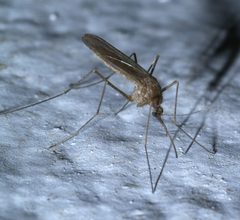
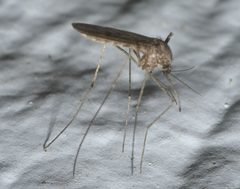
Culiseta inornata, commonly known as the winter marsh mosquito, is a of mosquito in the Culicidae. It has been extensively studied for its sensory physiology, mating , and osmoregulatory adaptations to brackish water . The species exhibits complex behavioral mechanisms for processing conflicting sensory stimuli and has been documented in central and southern California, where it occurs in marsh and brackish water environments.
Pronunciation
How to pronounce Culiseta inornata: //ˌkuːlɪˈsiːtə ɪˈnɔːrnətə//
These audio files are automatically generated. While they are not always 100% accurate, they are a good starting point.
Images
Habitat
Occurs in marsh and brackish-water environments. Larval habitats include standing water in tree holes and other water-holding depressions. In California, has been documented in the Colorado Desert and central California regions, occurring in habitats with seasonal water availability.
Distribution
Documented from southern California, central California, and the Colorado Desert of California. GBIF records indicate presence in North America, Middle America, and the Caribbean.
Seasonality
Active during cooler periods; 'winter marsh mosquito' suggests winter activity. In the Colorado Desert of California, abundance and gonotrophic status vary seasonally.
Diet
feed on nectar for energy. Females require blood meals for development, though specific are not documented in available sources. Larvae are filter-feeders that strain food particles and microorganisms from water.
Host Associations
- Coelomomyces psorophorae - Fungal that infects larvae
Life Cycle
Complete with , larva, pupa, and stages. Eggs deposited on water surface. Larvae are aquatic, breathing through a siphon, and develop in standing water including tree holes. Pupae (tumblers) are active and mobile. Adults emerge from pupae at water surface.
Behavior
Males form mating swarms near ground level around sunset. Males produce triggered by male-male contact or contact with objects. Both sexes produce auditory signals during mating. Copulation occurs in . Exhibits behavioral inhibition when processing conflicting sensory stimuli: salt stimulation on elevates labellar threshold for sucrose, while sucrose on tarsi can induce acceptance of normally rejected salt solutions. Feeding varies with nutritional condition and mouthpart deployment.
Ecological Role
Larvae serve as food source for predatory insects and other aquatic organisms. may function as when visiting flowers for nectar. for fungal psorophorae.
Human Relevance
Subject of extensive neurophysiological and behavioral research. Potential nuisance in marsh near human . Not documented as a major in available sources.
Similar Taxa
- Culiseta melanuraCongeneric with similar and preferences; Cs. melanura is distinguished by its role as primary of virus and documented preference for northern cardinals as
- Culiseta incidensCongeneric 'cool weather mosquito' with similar seasonal activity patterns; distinguished by geographic distribution and specific associations
More Details
Sensory Physiology Research
Culiseta inornata has been a model organism for studies of mosquito chemoreception and sensory integration. Research has demonstrated that labellar chemosensory hairs contain multiple functional units (water receptor and three salt receptors) that mediate behavioral responses to chemical stimuli.
Osmoregulatory Adaptations
Larvae possess specialized ultrastructural features in , , and anal papillae consistent with ion transport functions. Unlike saline-water Aedes , the rectum does not function as a salt gland for hyperosmotic fluid secretion, indicating distinct osmoregulatory strategies for brackish-water environments.
Mating System
Males produce that attract females, with release triggered by contact stimuli. Mating occurs in swarms near ground level at sunset, with both sexes producing auditory signals during the process.
Sources and further reading
- BugGuide
- Wikipedia
- GBIF taxonomy match
- iNaturalist taxon
- NCBI Taxonomy
- Meloidae Holdings | Entomology Research Museum
- Culiseta melanura mosquito bird hosts - Entomology Today
- How Florida Mosquito Control Could Trim Disease in Northern States
- I am an Entomologist | Beetles In The Bush
- Mosquito Populations Linked Across Further Distances Than the Viruses They Carry
- Bug Eric: Mosquitoes
- Sex Pheromones and Mating Behavior of Culiseta inornata (Diptera: Culicidae)
- Biological aspects of the interaction between Coelomomyces psorophorae zygotes and the larvae of Culiseta inornata: Host-mediated factors
- Behavioral studies of inhibition and integration in the mosquito Culiseta inornata (Williston)
- Ultrastructure of osmoregulatory organs in larvae of the brackish‐water mosquito, Culiseta inornata (Williston)
- Morphology of the head skeleton and muscles of the mosquito, Culiseta inornata (Williston) (Diptera: Culicidae)
- Comparisons of Factors Affecting Preimaginal Production of Culiseta inornata (Williston) (Diptera: Culicidae) in Two Different Habitats of Central California
- Studies on the Biology of Culiseta Inornata (Diptera: Culicidae) in Three Regions of Central California, USA1
- The Ecology of Culiseta inornata in the Colorado Desert of California: Seasonal Abundance, Gonotrophic Status, and Oviparity of Adult Mosquitoes1
- Effects of mating, nutritional condition, and mouthpart separation on ingestion and destination of sugar and water by the mosquito Culiseta inornata
- Functional units in the labellar chemosensory hairs of the mosquito Culiseta inornata (Williston)