
Culiseta
Felt, 1904
Species Guides
7- Culiseta alaskaensis(Alaskan winter mosquito)
- Culiseta impatiens(Impatient mosquito)
- Culiseta incidens(Cool Weather Mosquito)
- Culiseta inornata(Winter Marsh Mosquito)
- Culiseta melanura(black-tailed mosquito)
- Culiseta minnesotae(Minnesota winter mosquito)
- Culiseta particeps
Culiseta is a of mosquitoes in the Culicidae. Most are cold-adapted and occur in warmer climates primarily during colder seasons or at higher elevations. The genus is distributed worldwide except South America. Several species are significant , including C. melanura, the primary vector of virus in North America. Species exhibit diverse larval ranging from bogs and marshes to tree holes, rock pools, and underground sites.
Pronunciation
How to pronounce Culiseta: /ˌkjuːlɪˈsiːtə/
These audio files are automatically generated. While they are not always 100% accurate, they are a good starting point.
Identification
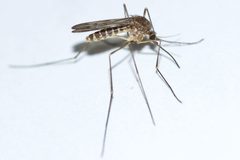
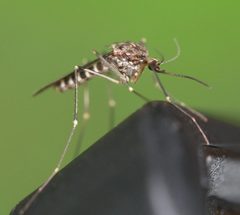
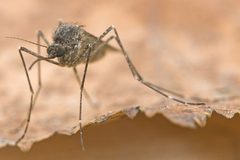
Culiseta are generally larger than many common mosquito such as Culex and Aedes. In Southern California, C. inornata, C. particeps, and C. incidens are notably large-bodied compared to other local mosquitoes. C. melanura is recognized by its black-tailed appearance. Species identification typically requires examination of male genitalia and larval characteristics; of the mitochondrial COI gene has been used to distinguish cryptic species such as C. indica from C. alaskaensis.
Images
Habitat
Larval are diverse and -specific: most species develop in bogs, marshes, ponds, streams, ditches, and rock pools. Some species occupy specialized habitats including tree holes (phytotelmata), water wells, and underground sites. C. melanura overwinters in wet tree holes in hardwood swamps and tree plantations in Florida. C. morsitans and C. litorea deposit on wet mud and leaf litter in England, with C. litorea primarily coastal.
Distribution
Worldwide distribution except South America. Documented from North America, Europe, Asia, Africa, Australia, and New Zealand. In North America, C. melanura occurs in eastern and central regions; C. inornata, C. particeps, and C. incidens are found in Southern California year-round. C. longiareolata has a distribution including the Middle East. C. indica is restricted to the Western Himalayan region of India.
Seasonality
Most are cold-adapted and active during cooler periods. In temperate regions, emerge in early May with activity continuing through September or October; overwinter as fourth-instar larvae. In Southern California, C. inornata, C. particeps, and C. incidens are active year-round. C. melanura in Florida maintains winter populations concentrated in tree holes, with abundance peaking in late spring.
Diet
females of most feed principally on birds. Mammalian feeding occurs occasionally, including livestock, rodents, and humans. C. melanura feeds preferentially on northern cardinals and other passerine birds, with 94.2% of blood meals from avian ; 0.8% exclusively mammalian and 5.0% mixed. C. morsitans shows similar patterns with 86.9% avian, 1.6% exclusively mammalian, and 11.5% mixed blood meals. Some species feed on reptiles. Males and females of both sexes feed on nectar.
Host Associations
- birds - primary blood Principal for most ; northern cardinals and wood thrush are preferred hosts for C. melanura
- mammals - occasional blood Includes livestock, rodents, humans; rare in some
- reptiles - blood Documented for some
Life Cycle
are deposited singly or in rafts on water surfaces, wet mud, or leaf litter. C. morsitans and C. litorea average 109 eggs per raft. C. morsitans eggs can remain unhatched and viable for many months at high humidity. Larvae are aquatic filter-feeders; most overwinter as fourth-instar larvae. occurs in spring (April in England), with beginning in early May. C. longiareolata exhibits autogeny in laboratory conditions, with 10.86% of unfed females producing egg rafts. Larval development is affected by : C. longiareolata larvae exposed to fish kairomones show slower and increased mortality.
Behavior
Females avoid oviposition sites with chemical cues from larvivorous fish but not algivorous fish, as demonstrated in C. longiareolata. C. melanura females in Florida overwinter in tree holes and show reduced blood-feeding during short . Light-traps are ineffective for sampling of some ; non-attractant suction traps yield few specimens.
Ecological Role
Larvae serve as prey for larvivorous fish and other aquatic . function as when feeding on nectar. Several are of : C. melanura is the primary vector of virus, maintaining enzootic transmission among birds with occasional spillover to mammals. C. longiareolata has been implicated in transmission of , , and arboviruses.
Human Relevance
Several attack domestic animals and occasionally humans. C. melanura is the principal of virus in North America, a highly pathogenic with approximately 50% fatality in symptomatic human cases. C. longiareolata is a suspected vector of multiple . Management strategies targeting winter such as tree holes may reduce spring and interrupt disease transmission.
Similar Taxa
- CulexSimilar general and shared Culicidae; Culiseta are generally larger and cold-adapted, with different larval preferences
- AedesBoth are culicid mosquitoes; Aedes are typically container-breeders with biting activity, while Culiseta species are often cold-adapted with activity patterns
More Details
Taxonomic subdivisions
The comprises seven subgenera: Culiseta (sensu stricto), Allotheobaldia, Austrotheobaldia, Climacura, Culicella, Neotheobaldia, and Theomyia. Two extinct are known from the Eocene Kishenehn Formation in Montana.
Population dynamics
Long-term monitoring on Brownsea Island, England (1964–1980) showed marked decline in C. litorea proportion with resurgence after eight years followed by crash, indicating cyclic .
Sources and further reading
- BugGuide
- Wikipedia
- GBIF taxonomy match
- iNaturalist taxon
- NCBI Taxonomy
- Catalogue of Life
- Culiseta melanura mosquito bird hosts - Entomology Today
- How Florida Mosquito Control Could Trim Disease in Northern States
- Mosquito Populations Linked Across Further Distances Than the Viruses They Carry
- Bug Eric: Mosquitoes
- Study Finds Bigger Mosquitoes in Baltimore Neighborhoods with More Abandoned Buildings
- Some Florida Mosquitoes Spend the Winter in Tortoise Burrows
- The biology of Culiseta morsitans and Culiseta litorea (Diptera: Culicidae) in England
- Confirmation of the recognition of Culiseta (Culiseta) indica Edwards, 1920 as a distinct species based on integrated morphological and molecular data
- Fish-released kairomones affect Culiseta longiareolata oviposition and larval life history
- Autogeny in Culiseta longiareolata (Culicidae: Diptera) Mosquitoes in Laboratory Conditions in Iran
- Autogeny in Culiseta longiareolata (Culicidae: Diptera) Mosquitoes in Laboratory Conditions in Iran
- MOLECULAR IDENTIFICATION OF BLOOD-MEAL SOURCES IN CULISETA MELANURA AND CULISETA MORSITANS FROM AN ENDEMIC FOCUS OF EASTERN EQUINE ENCEPHALITIS VIRUS IN NEW YORK