
Aedes increpitus
Dyar, 1916
Aedes increpitus is a floodwater mosquito native to western North America, first described by Harrison Gray Dyar Jr. in 1916. It belongs to the subgenus Ochlerotatus within the Aedes and is part of a that includes A. clivis and A. washinoi. The is adapted to temporary aquatic formed by seasonal flooding or snowmelt, with females laying drought- in moist substrates that hatch upon inundation. While females bite humans, the species is not considered a significant .
Pronunciation
How to pronounce Aedes increpitus: //ˈaɪdiːz ɪnˈkrɛpɪtəs//
These audio files are automatically generated. While they are not always 100% accurate, they are a good starting point.
Identification
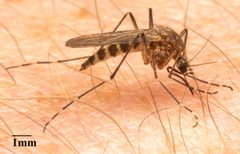
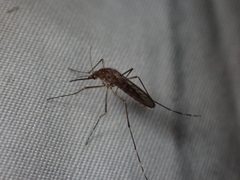
can be distinguished from related by pale on the legs and a characteristic banding pattern on the . The and palps display specific scale patterns that differentiate this from close relatives such as A. clivis and A. washinoi. For comprehensive morphological identification, reference to Darsie and Ward (2005) is recommended.
Images
Habitat
Woodland and forested areas, particularly in mountainous regions. Breeding occurs in temporary pools formed by snowmelt or seasonal flooding.
Distribution
Western United States (California, Oregon, Washington), parts of Canada, and recorded in Siberia, Russia.
Diet
Females feed on a range of including mammals and birds.
Life Cycle
Females deposit in moist soil or leaf litter in flood-prone areas. Eggs remain until flooding triggers hatching. Larvae develop in temporary pools, with emerging after several weeks depending on temperature and water availability.
Behavior
Daytime biter, most active during early morning and late afternoon.
Ecological Role
Floodwater mosquito with adapted to periodic inundation of temporary aquatic .
Human Relevance
Can bite humans but not considered a significant of human . Laboratory studies indicate low vector competence for California virus. Not regarded as a major public health concern.
Similar Taxa
- Aedes clivisMember of the same ; morphologically similar
- Aedes washinoiMember of the same ; known to hybridize with A. increpitus in regions of California including near Burney, Lassen County, and Lassen Volcanic National Park
Sources and further reading
- BugGuide
- Wikipedia
- GBIF taxonomy match
- iNaturalist taxon
- Catalogue of Life
- Geoffrey Attardo: Invasive Mosquito Populations Moving Throughout California | Bug Squad
- Geoffrey Attardo: Growing Presence of This Mosquito: 'A Major Public Health Threat' | Bug Squad
- Three-Quarters of U.S. Has Suitable Climate for Aedes aegypti and Aedes albopictus Mosquitoes
- Edible Plant Oils Show Potential for Management of Aedes aegypti
- Flower Pots a Common Breeding Site for Aedes aegypti Mosquitoes
- Dengue Virus Effects on Aedes aegypti Mosquitoes: Genetic Manipulation or Byproduct?