
Pseudochironomus richardsoni
Malloch, 1915
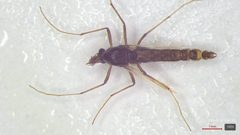
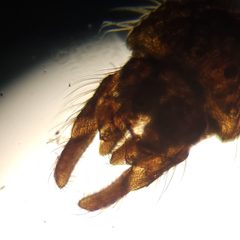
A non-biting midge in the Chironomidae, first described by Malloch in 1915. Laboratory studies demonstrate strong phenotypic plasticity in growth and development in response to food quality and thermal conditions. The species exhibits compensatory growth capacity, maintaining development rates under thermal stress when high-quality food is available.
Pronunciation
How to pronounce Pseudochironomus richardsoni: //ˌsjuːdəʊˌkɪrəˈnəʊməs ˌrɪtʃɑːrdˈsəʊni//
These audio files are automatically generated. While they are not always 100% accurate, they are a good starting point.
Images
Habitat
Freshwater benthic environments including cold seeps, main stream channels, and side pools. Field studies document occupancy of thermal ranging from 15–21°C in cold seeps, 20–27°C in main channels, and 18–33°C in side pools.
Diet
Larvae feed on diatoms and algal detritus. Laboratory studies show significantly higher growth rates on diatom diets compared to detritus; pupae reared on diatoms are consistently larger than those reared on detritus.
Life Cycle
Complete with , larval, pupal, and stages. Larval development is temperature-dependent; specific growth rates range from 0.057 to 0.267 day⁻¹ under experimental conditions. Pupal mass decreases with increasing temperature when larvae are reared on detritus, but shows no significant temperature relationship on diatom diets.
Behavior
Growth plasticity allows developmental compensation for suboptimal thermal conditions when food quality is high. Fluctuating temperatures reduce growth on low-quality diet but not on high-quality diet, indicating conditional thermal .
Ecological Role
Benthic primary consumer contributing to secondary production and nutrient cycling in freshwater . Interactive effects of food quality and thermal environment influence -specific contributions to ecosystem productivity.