
Microtendipes
Kieffer, 1915
non-biting midges
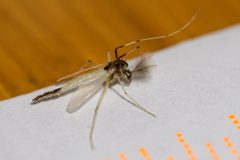
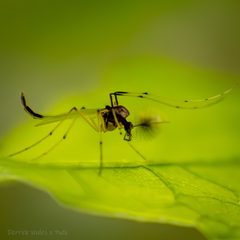
Microtendipes is a of non-biting midges in the Chironomidae comprising over 60 with nearly worldwide distribution. males are distinguished by one or two rows of stout proximally directed setae on the fore . The genus is divided into two species groups based on larval characteristics. Species delimitation has been historically challenging due to color pattern variations, but has proven effective for identification.
Pronunciation
How to pronounce Microtendipes: //ˌmaɪ.kroʊˈtɛn.dɪˌpiːz//
These audio files are automatically generated. While they are not always 100% accurate, they are a good starting point.
Identification
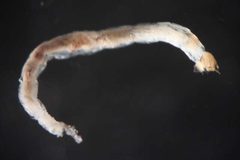
males identified by one or two rows of stout proximally directed setae on fore . Larvae assigned to two groups based on morphological traits. Species-level identification historically complicated by color pattern variations; (COI) now standard with average intraspecific divergence of 2.8% and interspecific divergence of 12.5%. Larval identification uses capsule ratios, mandibular pecten length, counts, and ring organ position.
Images
Habitat
Larvae occur in littoral and sublittoral sediments of large bodies of water; few inhabit running water. Specific collection records include subtropical streams with rocky or bedrock substrates, forest streams with high-clarity water, rivers, lakes, and rice paddy areas.
Distribution
Nearly , occurring in all zoogeographical regions. Documented from Africa, Russian Far East, East Asia (Japan, China), Australia, Thailand, and Europe (Denmark, Norway, Sweden). Specific Chinese localities include Zhejiang Province at elevations from 370–1600 m. Japanese records span from Hokkaido to Nansei Islands including Tsushima, Iki, and Iriomote Islands.
Life Cycle
Complete with larval and stages; larval–adult associations established via for several . Larval stage described for multiple species including M. baishanzuensis, M. robustus, and M. tuberosus.
Ecological Role
Bio-indicators of water quality and environmental changes; used in freshwater biomonitoring and assessing biodiversity patterns in aquatic . Larvae contribute to advancing Chironomidae and addressing challenges of cryptic diversity in aquatic ecosystem assessment.
Similar Taxa
- PolypedilumFormerly included now transferred to Polypedilum (Cerobregma) and Polypedilum (Polypedilum); distinguished by different larval and characteristics
- Other Chironominae generaMicrotendipes larvae distinguished by specific combinations of capsule features, mandibular pecten structure, and patterns; by fore femoral setation pattern
Sources and further reading
- BugGuide
- Wikipedia
- GBIF taxonomy match
- iNaturalist taxon
- NCBI Taxonomy
- Catalogue of Life
- Review of the Japanese Microtendipes (Diptera: Chironomidae: Chironominae), with description of a new species
- New Color-Patterned Species of Microtendipes Kieffer, 1913 (Diptera: Chironomidae) and a Deep Intraspecific Divergence of Species by DNA Barcodes
- First morphological description of the larval stages of three Microtendipes species (Diptera, Chironomidae) from South China with molecular confirmation