
Polypedilum
Kieffer, 1912
Species Guides
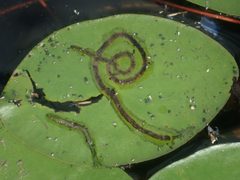
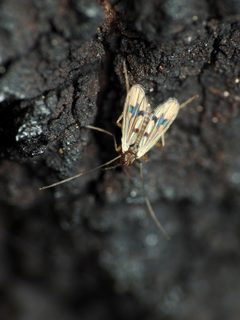
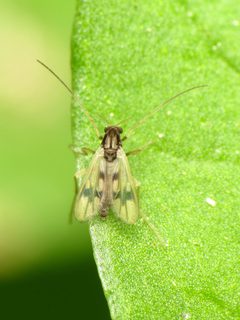
8Polypedilum is a of non-biting midges in the Chironomidae, Chironominae. It is probably the most -rich genus among all . Larvae are frequently abundant in lentic freshwater , with documented densities reaching 1200 larvae per square meter in eutrophic ponds. The genus comprises multiple subgenera including Cerobregma, Pentapedilum, Polypedilum, Probolum, Tripodura, and Uresipedilum.
Pronunciation
How to pronounce Polypedilum: /ˌpɒlɪˈpɛdɪləm/
These audio files are automatically generated. While they are not always 100% accurate, they are a good starting point.
Identification
lack the piercing mouthparts of biting midges and mosquitoes. Larvae possess a characteristic combination of morphological features typical of Chironominae, including specific arrangements of setae on the capsule and body segments. -level identification requires examination of male genitalia, pupal , and larval mouthpart structures. Subgeneric assignment relies on particular combinations of antennal, leg, and genitalic characters.
Images
Habitat
Larvae occur in diverse freshwater including ponds, lakes, and slow-moving waters. Some inhabit phytotelmata (water-holding plants such as Eryngium). Eutrophic ponds support particularly high larval densities. Specific habitat preferences vary by subgenus and species.
Distribution
Records from multiple continents including South America (Argentina, Colombia), Africa, Asia (China, Japan), Europe (Denmark, Norway, Sweden), and North America (United States). The occurs across all zoogeographical regions with showing distinct regional distributions.
Life Cycle
Complete with , larval, pupal, and stages. Larvae are aquatic and often the life stage in terms of abundance and duration. occurs in water or at the water surface. Adults are short-lived and do not feed.
Ecological Role
Larvae are significant components of freshwater benthic , serving as prey for fish and other aquatic . High densities in eutrophic systems indicate importance in nutrient cycling and energy transfer in lentic .
Human Relevance
Larvae are frequently used as bioindicators in water quality assessments due to their abundance and sensitivity to environmental conditions. Some have been subjects of physiological research, including desiccation studies.
Similar Taxa
- ChironomusAlso abundant red larvae in freshwater ; distinguished by differences in larval capsule , structure, and male genitalic features.
- PhaenopsectraPhylogenetically close within Chironomini; separated by specific combinations of antennal and genitalic characters.
Sources and further reading
- BugGuide
- Wikipedia
- GBIF taxonomy match
- iNaturalist taxon
- NCBI Taxonomy
- Catalogue of Life
- The immature stages of Polypedilum (Pentapedilum) nodosum (Johannsen) and Polypedilum (Tripodura) masudai (Tokunaga) (Diptera, Chironomidae, Chironominae)
- Synonymy, distribution, and morphological notes on Polypedilum (s. s.) nubifer (Skuse) : Diptera : Chironomidae
- Male description of the phytotelma-dwelling species Polypedilum parthenogeneticum (Chironomidae: Chironominae)
- Revision of Polypedilum (Pentapedilum) Kieffer and Ainuyusurika Sasa et Shirasaki (Diptera: Chironomidae)