
Chaoborus astictopus
Dyar & Shannon, 1924
Clear Lake gnat
Chaoborus astictopus is a phantom midge ( Chaoboridae) commonly known as the Clear Lake gnat. The has a with emerging in spring. Older larvae exhibit diel vertical , occupying deep profundal zones during daylight hours and moving to open waters at night, indicating negative . The species has been studied as a target for control and is known to microsporidian and fungal .
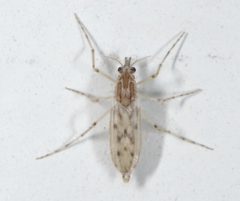
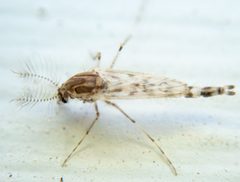
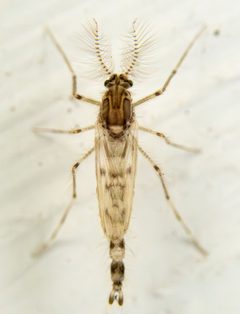
Pronunciation
How to pronounce Chaoborus astictopus: //keɪˈoʊbərɪs əˌstɪkˈtoʊpəs//
These audio files are automatically generated. While they are not always 100% accurate, they are a good starting point.
Images
Habitat
Permanent lentic including lakes, ponds, and . Older larvae occupy the profundal zone (deep, bottom waters) during daylight and migrate to open waters at night.
Seasonality
emerge in spring. with one per year.
Host Associations
- Thelohania corethrae - Microsporidian ( Nosematidae); occur during winter season
- Tolypocladium cylindrosporum - Fungal
Life Cycle
(one per year). Larvae are aquatic.
Behavior
Older larvae exhibit negative , with diel vertical between profundal zones during day and open waters at night.
Ecological Role
Target organism for control studies in managed water bodies; larval stage functions as part of aquatic in lentic .
Human Relevance
Subject of efficacy studies for control in aquatic environments; references association with Clear Lake.
More Details
Pathogen susceptibility
Larvae are vulnerable to Thelohania corethrae during winter and susceptible to Tolypocladium cylindrosporum .
Research history
and patterns have been studied using application methods to track parameters.
Sources and further reading
- BugGuide
- Wikipedia
- GBIF taxonomy match
- iNaturalist taxon
- NCBI Taxonomy
- Catalogue of Life
- Host-parasite relationships of Thelohania corethrae (Nosematidae: Microsporidia) from Chaoborus astictopus (Diptera: Chaoboridae)
- The Use of Insecticide to Determine the Life History of an Aquatic Gnat Chaoborus astictopus
- Effects of Diflubenzuron on Chaoborus astictopus and Nontarget Organisms and Persistence of Diflubenzuron in Lentic Habitats1