
Rhopalomyia clarkei
Felt, 1907
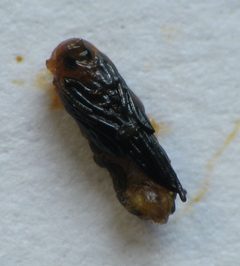
Rhopalomyia clarkei is a gall midge in the Cecidomyiidae, first described by Felt in 1907. The species induces small, conical, single-chambered galls on two plants: Solidago altissima and Solidago rugosa. It occurs in north-eastern and north-central North America. females are approximately 2 mm long with a dull red and 17 antennal segments.
Pronunciation
How to pronounce Rhopalomyia clarkei: /ˌroʊ.pə.loʊˈmaɪ.iə ˈklɑːrki/
These audio files are automatically generated. While they are not always 100% accurate, they are a good starting point.
Identification
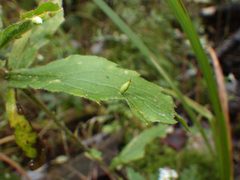
Distinguished from other Rhopalomyia by gall and specificity. Galls are conical, single-chambered, and typically occur on leaf undersides attached to major or minor , occasionally on upper leaf surfaces or stems. Association with Solidago altissima or Solidago rugosa is diagnostic. The combination of small size (2.5–6 mm), conical shape, green-yellow coloration, and short whitish separates it from other goldenrod gall midges.
Images
Appearance
female 2 mm in length with dull red and 17 antennal segments. Larvae are white. Galls are small, conical, single-chambered structures, green to yellowish-green, covered with short whitish hairs, tapering toward apex. On Solidago rugosa, galls measure 2.5–6 mm long and 0.7–1.2 mm wide at widest point. Young galls may bear a tuft of hair at base nearly as long as gall itself.
Habitat
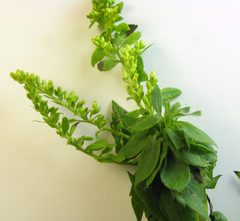
Associated with plants Solidago altissima and Solidago rugosa in areas where these goldenrod occur. No specific requirements beyond host presence documented.
Distribution
North-eastern and north-central North America. Documented from Vermont and other US states in this region.
Diet
Larvae feed within galls induced on Solidago altissima and Solidago rugosa. Specific feeding mechanism and diet not documented.
Host Associations
- Solidago altissima - gall Larval gall induction on leaves and stems
- Solidago rugosa - gall Larval gall induction; gall dimensions documented from this
Life Cycle
Single larva develops within each gall. Specific developmental stages and not documented beyond gall association.
Behavior
Larvae induce gall formation on plant tissues. Each gall contains a single white larva. No behavioral observations documented.
Ecological Role
Induces galls on goldenrod plants, potentially affecting plant growth and tissue allocation. Serves as food source for unknown natural enemies. Specific functions not documented.
Human Relevance
Subject of entomological study regarding gall induction and cecidomyiid . No documented economic or medical significance.
Similar Taxa
- Other Rhopalomyia speciesShare Cecidomyiidae and ; distinguished by gall , specificity, and geographic range
- Other goldenrod gall midgesInduce galls on Solidago ; R. clarkei distinguished by conical shape, single-chambered structure, and specific dimensions
More Details
Gall morphology variation
Gall position varies: typically on lower leaf surface attached to , but occasionally on upper leaf surface or stems
Taxonomic authority
First described by Ephraim Porter Felt in 1907, a prominent North American cecidomyiid