
Rhopalomyia baccharis
Felt, 1908
coyote brush twisted stem gall midge, Baccharis Stem Gall Midge
Rhopalomyia baccharis is a gall midge in the Cecidomyiidae that induces twisted stem galls on Baccharis , particularly coyote brush (Baccharis pilularis). The species was described by Felt in 1908 and is associated with plants in the Asteraceae family. Like other Cecidomyiidae, it has a complete with distinct larval, pupal, and stages.
Pronunciation
How to pronounce Rhopalomyia baccharis: //ˌroʊpəloʊˈmaɪə ˈbækərɪs//
These audio files are automatically generated. While they are not always 100% accurate, they are a good starting point.
Identification
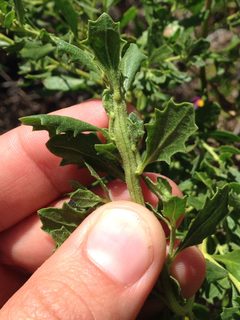
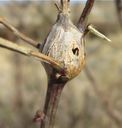
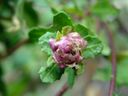
Induces distinctive twisted, spiral galls on stems of Baccharis plants. The galls are diagnostic for this and can be identified by their corkscrew-like deformation of the stem tissue. are small, delicate flies typical of the Cecidomyiidae, but specific morphological characters distinguishing R. baccharis from require examination.
Images
Habitat
Associated with stands of Baccharis shrubs, particularly in coastal scrub, chaparral, and riparian where plants occur.
Distribution
Western North America where Baccharis plants are present, including California and adjacent regions.
Host Associations
- Baccharis pilularis - gall inductioncoyote brush; primary
- Baccharis sarothroides - gall inductiondesert broom; records from Arizona
Ecological Role
As a gall inducer, modifies plant architecture and may influence plant growth patterns. Provides gall tissue that serves as food and shelter for the developing larva.
Similar Taxa
- Other Rhopalomyia speciesMultiple Rhopalomyia induce galls on Baccharis; accurate identification typically requires examination of gall and characters. R. baccharis is specifically associated with twisted stem galls rather than leaf or bud galls.