
Celticecis oviformis
(Patton, 1897)
Hackberry Spherical Stem Gall Midge
Celticecis oviformis is a gall midge in the Cecidomyiidae that induces distinctive spherical stem galls on hackberry trees (Celtis ). The species is native to North America and has been documented through gall formation rather than direct observation of the . The galls are among the most conspicuous and structurally complex of hackberry galls, often persisting on branches for multiple years. The midge completes its within these galls, with larvae developing inside the protective plant tissue.
Pronunciation
How to pronounce Celticecis oviformis: /ˌkɛltɪˈsiːs ˌoʊvɪˈfɔːrmɪs/
These audio files are automatically generated. While they are not always 100% accurate, they are a good starting point.
Identification
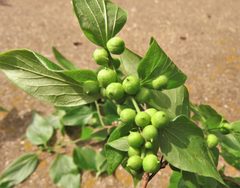
The spherical stem galls are diagnostic: they are hard, woody, and nearly perfectly round, attached directly to twigs and small branches of hackberry. Distinguished from other Celticecis by gall location (stems vs. leaves) and shape (spherical vs. irregular or pouch-like). Celticecis capsularis forms smaller, more elongate leaf petiole galls; Celticecis celtiphyllia induces irregular blister galls on leaf blades. The spherical stem gall is unique to C. oviformis among North American hackberry gall midges.
Images
Habitat
Associated with hackberry trees in deciduous woodlands, riparian forests, urban plantings, and shelterbelts. Galls have been observed on both native and ornamental Celtis . The is tied to the presence of its plant rather than specific conditions.
Distribution
Documented across eastern and central North America, from the Great Plains to the Atlantic coast, and from the Great Lakes region south to Texas and Florida. Records correspond with the range of hackberry , particularly Celtis occidentalis and Celtis laevigata.
Seasonality
timing is poorly documented; galls are visible year-round. Larvae are present within galls through winter. Gall initiation on new growth likely occurs in spring, with mature galls persisting for one to several years.
Diet
Larvae feed on nutritive tissue within the gall, induced by the 's chemical manipulation of plant . The specific nutritional relationship has not been characterized in detail.
Host Associations
- Celtis occidentalis - gall induction on stemsprimary
- Celtis laevigata - gall induction on stemssouthern records
Life Cycle
Induces gall formation on hackberry stems; larvae develop within gall tissue through summer and overwinter. occurs within the gall. emerge through exit holes, leaving small circular openings in the gall wall. The complete duration and number of per year are not established.
Behavior
are weak fliers, active for brief periods. The is known primarily through its gall induction; direct behavioral observations of adults are scarce. Larvae are sedentary, developing within the protected gall chamber.
Ecological Role
Galls provide microhabitat for and , though specific associates of C. oviformis are not well documented. The galls represent a minor sink of plant resources but do not typically cause significant tree mortality.
Human Relevance
Galls are conspicuous on ornamental hackberries and may be noticed by arborists and gardeners, but cause no significant economic damage. Occasionally used in educational contexts to illustrate plant-insect interactions. The is not a pest of agricultural or forestry significance.
Similar Taxa
- Celticecis capsularisForms smaller, elongate-oval galls on leaf petioles rather than spherical stem galls.
- Celticecis celtiphylliaInduces irregular, pouch-like blister galls on leaf blades, not hard spherical stem galls.
- Pachypsylla species (jumping plant lice)Form various hackberry galls but belong to Hemiptera; galls are structurally different and are psyllids, not .
More Details
Gall Longevity
Galls may persist on branches for several years after the inducing has completed development, leading to accumulation of old, empty galls on mature trees.
Taxonomic History
Originally described in the Cecidomyia by Patton in 1897; later transferred to Celticecis following establishment of that genus for hackberry-associated gall midges.