
Clinodiplosis rhododendri
Rhododendron Gall Midge
Clinodiplosis rhododendri is a gall midge in the Cecidomyiidae that induces gall formation on rhododendron plants. The is known primarily from limited observations, with most records documenting its association with cultivated and native Rhododendron species. As a gall-forming insect, it manipulates plant tissue to create protected feeding structures. The species is of interest to horticulturists due to its potential impact on ornamental rhododendrons.
Pronunciation
How to pronounce Clinodiplosis rhododendri: /ˌklaɪnoʊdɪˈploʊsɪs ˌroʊdəˈdɛndraɪ/
These audio files are automatically generated. While they are not always 100% accurate, they are a good starting point.
Identification
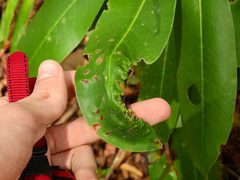
are difficult to distinguish from other Clinodiplosis without microscopic examination of genitalia and antennal structure. The most reliable identification method is association with the characteristic galls on Rhododendron leaves or flower buds. Galls appear as small, swollen, discolored growths, often on leaf margins or within developing flower clusters. Larval presence within galls confirms species identity; larvae can be distinguished from other rhododendron-associated gall midges by their specific gall location and .
Images
Appearance
are minute flies, approximately 2–4 mm in length, with the delicate build characteristic of Cecidomyiidae. Body coloration is not well documented; most cecidomyiids are pale to dark brown or yellowish. are long and bead-like (), with of setae. Wings are clear with reduced venation, bearing few crossveins. Larvae are small, legless, and maggot-like, typically pale orange to reddish in color when mature.
Habitat
Found in supporting Rhododendron , including mixed deciduous and coniferous forests, woodland edges, and cultivated gardens. Thrives in moist, shaded environments where plants grow in acidic, well-drained soils. Associated with both native rhododendron and ornamental plantings in suburban and urban settings.
Distribution
Documented from eastern North America, with records from the northeastern United States and southeastern Canada. Distribution corresponds closely with the range of suitable Rhododendron , particularly in the Appalachian region and adjacent areas.
Seasonality
occurs in spring, coinciding with plant bud break and early leaf development. Larval development proceeds within galls through late spring and early summer. occurs within galls or in soil. Specific timing varies with latitude and local climate conditions.
Diet
Larvae feed on gall tissue induced within Rhododendron leaves and flower buds. The feeding stimulates abnormal plant growth, creating nutritive tissue that sustains larval development. do not feed or have minimal feeding requirements.
Host Associations
- Rhododendron - gall inducerLarvae induce galls on leaves and flower buds; specific within not fully documented
Life Cycle
Females deposit on young Rhododendron tissue, typically on developing leaves or within flower buds. Larvae hatch and initiate gall formation, feeding internally on proliferating plant tissue. Development occurs through three larval instars within the gall. Mature larvae exit galls and pupate in soil or leaf litter. emerge to mate and oviposit on new growth. time appears to be , with one complete cycle per year, though this requires confirmation.
Behavior
Larvae are sedentary, remaining within their individual galls throughout development. are weak fliers, dispersing short distances to locate plants. Mating likely occurs on or near host plants. Oviposition targets actively growing meristematic tissue.
Ecological Role
Functions as a herbivore that manipulates plant physiology. Galls may provide microhabitats for secondary occupants, including and . levels are generally low enough that significant -level impacts are unlikely; however, localized heavy may affect host plant reproductive output.
Human Relevance
Considered a minor pest of ornamental rhododendrons in nursery and landscape settings. Gall formation can reduce aesthetic value of plants and, in severe cases, diminish flowering. Control is rarely necessary; applications or pruning of galled tissue may reduce . Not known to plant or pose direct human health risks.
Similar Taxa
- Dasineura rhododendriAnother rhododendron-associated gall midge; induces different gall types (typically leaf edge rolls or flower bud galls with distinct ); microscopic examination of larvae and required for definitive separation
- Other Clinodiplosis speciesNumerous exist, many gall-formers on unrelated plants; identification relies on host association and detailed morphological study of specimens
More Details
Taxonomic Note
The was described based on association with Rhododendron galls; type material and detailed morphological description may be limited in accessibility. Verification of identifications from iNaturalist and similar platforms typically requires expert examination of specimens.
Research Needs
Basic remains incompletely known, including precise range within Rhododendron , voltinism, natural enemy complex, and . Most published information derives from pest management literature rather than systematic study.