
Caryomyia tuberidolium
Gagné, 2008
Caryomyia tuberidolium is a of gall midge in the Cecidomyiidae, described by Gagné in 2008. It is known to induce galls on hickory trees (Carya species), forming distinct structures on the leaves. The species is part of a specialized on Carya . It has been documented across the eastern United States where its host trees occur.
Pronunciation
How to pronounce Caryomyia tuberidolium: //ˌkɛəri.oʊˈmaɪə/ ˌtuːbɛriˈdoʊliəm/
These audio files are automatically generated. While they are not always 100% accurate, they are a good starting point.
Identification
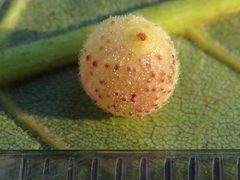
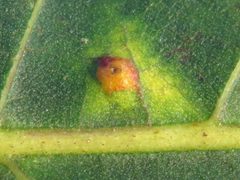
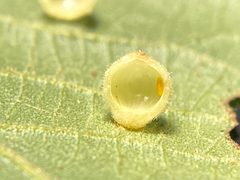
Distinguished from other Caryomyia by the of the leaf galls it produces—rounded, tuber-like swellings on hickory leaves. require microscopic examination for definitive identification; the male genitalia and antennal structure are diagnostic features used to separate it from . The gall shape and association (Carya species) provide field-level identification cues.
Images
Appearance
are minute flies, approximately 2–4 mm in length, with the reduced wing venation and long, bead-like characteristic of Cecidomyiidae. The body is slender and delicate. The 'tuberidolium' refers to the tuber-like or swollen gall structures induced on leaves.
Habitat
Deciduous forests and woodlands where hickory trees (Carya ) are present. Occurs in mesic to dry-mesic forest conditions across the species' range. The microhabitat is defined by the presence of suitable trees rather than specific abiotic conditions.
Distribution
Eastern United States, corresponding to the range of its Carya . Documented from states including but not limited to Ohio, Pennsylvania, Virginia, North Carolina, and Tennessee. Distribution is limited by host tree availability.
Seasonality
occurs in spring, coinciding with hickory leaf flush. Gall formation is visible on leaves from late spring through summer. likely occurs as larvae in fallen leaves or in soil, though this has not been explicitly documented for this .
Host Associations
- Carya - gall inducerForms leaf galls on hickory
Life Cycle
Induces galls on hickory leaves; larvae develop within these galls. likely occurs in the gall or in leaf litter. Specific details of -laying and number of per year have not been published.
Ecological Role
Acts as a gall-forming herbivore on hickory trees. The galls may provide microhabitat for or , though specific associates for this are not documented. Contributes to leaf damage and nutrient cycling in forest .
Human Relevance
No direct economic importance. Of interest to forest entomologists and gall researchers. The galls are conspicuous but do not cause significant harm to healthy hickory trees.
Similar Taxa
- Caryomyia caryaecolaAlso forms galls on hickory leaves; distinguished by gall (C. caryaecola produces pouch-like or bladder galls rather than tuber-like swellings)
- Caryomyia inaquilinusAnother hickory-associated ; separated by gall structure and morphological features
- Other Cecidomyiidae on CaryaMultiple cecidomyiid induce galls on hickory; precise identification requires examination of gall form and microscopic features
More Details
Taxonomic history
Described by Raymond Gagné in 2008 as part of ongoing revisionary work on the Caryomyia. The epithet refers to the tuber-like galls ('tuberi-' + Latin 'dolium' referring to a vat or container, alluding to the gall shape). The genus Caryomyia is to North America and exclusively associated with Carya (hickory and pecan).
Research status
Most information on this derives from taxonomic descriptions and gall surveys. Detailed studies of its , associations, and have not been published. The 191 iNaturalist observations suggest it is regularly encountered but understudied.