
Schizomyia macrofila
(Felt, 1907)
Fiddleneck Midge Gall
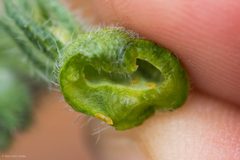
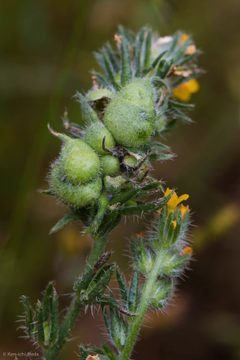
Schizomyia macrofila is a gall midge in the Cecidomyiidae, known for inducing galls on fiddleneck plants (Amsinckia spp.). The species was described by Felt in 1907. As a member of the Schizomyia, it belongs to a group of gall midges specialized in forming distinct plant growths. The "Fiddleneck Gall" reflects its association with this plant group.
Pronunciation
How to pronounce Schizomyia macrofila: //ˌskɪzoʊˈmaɪə ˌmækroʊˈfaɪlə//
These audio files are automatically generated. While they are not always 100% accurate, they are a good starting point.
Identification
Identification relies primarily on the distinctive galls induced on fiddleneck plants (Amsinckia ) rather than . The specific gall structure and association are the primary diagnostic features. Adult cecidomyiids are small, delicate flies with reduced wing venation, but species-level identification of adults typically requires examination of genitalia and other microscopic characters by .
Images
Habitat
Associated with supporting fiddleneck plants (Amsinckia spp.), which commonly occur in grasslands, open woodlands, and disturbed areas in western North America. The is tied to the presence of its plants in Mediterranean and semi-arid climatic zones.
Distribution
Western North America, with records concentrated in California and surrounding regions where fiddleneck plants are native or naturalized. The distribution corresponds closely with that of its plant Amsinckia.
Seasonality
activity and gall formation likely coincide with the growing season of fiddleneck plants, which typically flower in spring (March–May in California). Specific data for this is limited.
Diet
Larvae feed on plant tissue within galls induced on fiddleneck plants (Amsinckia spp.). do not feed; their mouthparts are reduced or non-functional, as is typical for cecidomyiid gall midges.
Host Associations
- Amsinckia - gall inducer plant ; specific gall formation on fiddleneck
Life Cycle
Like other cecidomyiid gall midges, the involves , larval, pupal, and stages. Larvae develop within plant galls, feeding on tissue. occurs either within the gall or in the soil. Adults are short-lived and do not feed. Specific details of voltinism and stage for this are not documented.
Ecological Role
As a gall inducer, modifies plant growth and may influence plant resource allocation. The galls provide protected microhabitats for the developing larvae. Potential interactions with and other gall-associated arthropods have not been documented for this .
Human Relevance
No direct economic or medical significance. The suggests some recognition among naturalists and entomologists studying plant galls. Some fiddleneck (Amsinckia) contain toxic to livestock, but the 's role in this context is incidental.
Similar Taxa
- Other Schizomyia speciesCongeneric gall midges that may induce similar galls on related plants; differentiation requires host plant identification and detailed morphological examination
- Other Cecidomyiidae on BoraginaceaeOther gall midge may attack plants in the fiddleneck ; specificity and gall are key distinguishing features
More Details
Taxonomic History
Described by Ephraim Porter Felt in 1907, a prominent early American cecidomyiid . The specific epithet "macrofila" refers to the large filaments or larval features noted in the original description.
Gall Characteristics
The specific of galls induced by this on Amsinckia has not been detailed in readily accessible literature, representing a gap in publicly available knowledge.