
Polystepha pilulae
(Beutenmüller, 1892)
Oak Leaf Gall Midge
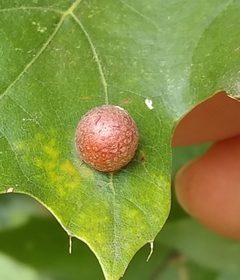
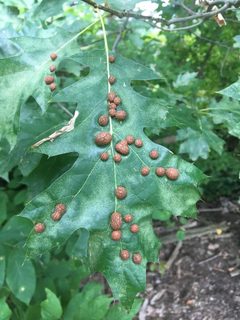
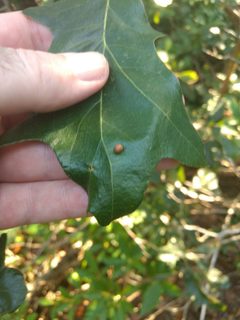
Polystepha pilulae is a gall midge in the Cecidomyiidae, known for inducing distinctive leaf galls on oaks in the red oak group (Quercus sect. Lobatae). The is found in eastern North America. The galls are circular, thick-walled structures formed on the upper leaf surface between .
Pronunciation
How to pronounce Polystepha pilulae: /pɒlɪˈstiːfə pɪˈluːlaɪ/
These audio files are automatically generated. While they are not always 100% accurate, they are a good starting point.
Identification
Distinguished by its association with circular, thick-walled, reddish-brown galls (3–4 mm) on upper surfaces of red oak group leaves, positioned between . The flat to convex gall shape and specific association help separate it from other oak gall midges.
Images
Appearance
are small, delicate flies typical of gall midges. The galls induced by larvae are circular, 3–4 mm in diameter, thick-walled, and reddish-brown in color. Galls may be flat or convex in profile.
Habitat
Deciduous forests and woodlands containing oaks in the red oak group (Quercus sect. Lobatae).
Distribution
Eastern North America; confirmed records include Vermont and other US localities.
Host Associations
- Quercus sect. Lobatae - larval gall inductionRed oak group; galls form on upper leaf surface between
Life Cycle
Larvae develop within leaf galls. Specific details of , , and are not documented.
Ecological Role
Gall induction modifies leaf tissue, creating a protected microhabitat for larval development. Effects on overall tree health are not established.
Human Relevance
No significant economic or medical importance. Galls are occasionally noted by naturalists and foresters.
Similar Taxa
- Other Polystepha speciesCongeneric gall midges may induce similar oak leaf galls; precise identification requires examination of or gall microstructure.
- Other oak gall midges (Cecidomyiidae)Numerous cecidomyiids form galls on oaks; gall position, shape, and specificity distinguish P. pilulae.
More Details
Gall morphology
Galls are thick-walled and positioned specifically between leaf on the upper surface, unlike some other oak galls that occur on veins or leaf undersides.