
Asphondylia neomexicana
(Cockerell, 1896)
Fourwing Saltbush Woolly Gall Midge
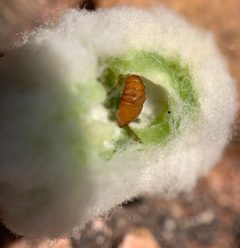
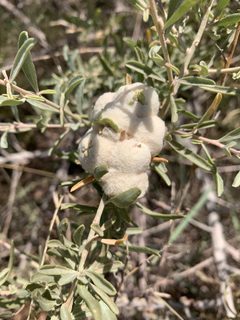
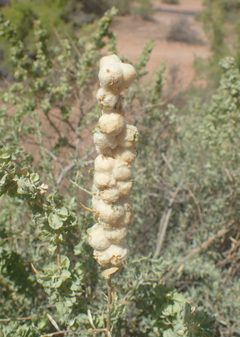
Asphondylia neomexicana is a gall midge in the Cecidomyiidae, first described by Cockerell in 1896. Like other members of its , this induces distinctive woolly galls on plants. The genus Asphondylia is notable for containing numerous species that manipulate plant growth to form protective structures for their developing larvae. Based on its specific epithet and the "Fourwing Saltbush Woolly Gall Midge," this species appears associated with fourwing saltbush (Atriplex canescens) or related Atriplex species in arid western North American .
Pronunciation
How to pronounce Asphondylia neomexicana: /æsfɒnˈdɪliə ˌniːoʊmɛksɪˈkæna/
These audio files are automatically generated. While they are not always 100% accurate, they are a good starting point.
Identification
Identification of Asphondylia neomexicana relies primarily on examination of the galls it produces and morphological features typical of the : small, delicate flies with long, slender legs, reduced wing venation, and bead-like with circumfilar . The woolly gall structure on plants distinguishes it from non-gall-forming insects. Specific identification requires knowledge of Cecidomyiidae and comparison with .
Images
Habitat
Associated with fourwing saltbush (Atriplex canescens) and related saltbush in arid and semi-arid environments. The plant suggests including desert scrub, sagebrush steppe, dry grasslands, and saline or alkaline soils of the southwestern United States and adjacent Mexico.
Distribution
New Mexico and adjacent arid regions of the southwestern United States and northern Mexico, inferred from the specific epithet "neomexicana" and association with fourwing saltbush. The Asphondylia has broad distribution across North America with many regionally specialized .
Diet
Larvae feed on plant tissue within the gall structure induced on saltbush . feeding habits unknown but likely include nectar or honeydew based on related Cecidomyiidae.
Host Associations
- Atriplex canescens - plantfourwing saltbush; induces woolly galls
Life Cycle
Complete with , larval, pupal, and stages. Females deposit eggs into plant tissue, triggering gall formation. Larvae develop within the woolly gall, feeding on nutritive plant tissue. occurs within the gall. Adults emerge to mate and disperse. Specific timing of unknown but likely synchronized with host plant growth in spring and summer.
Behavior
Gall induction represents the primary behavioral trait: females chemically and mechanically manipulate plant tissue to redirect growth, forming a protective woolly gall that shelters developing larvae and provides nutrition.
Ecological Role
As a gall inducer, modifies plant growth and resource allocation. Galls may serve as microhabitats for other organisms including , , and . The woolly gall structure provides some protection from desiccation and in arid environments.
Human Relevance
Minimal direct economic impact. Potential minor significance in native plant restoration or rangeland management where fourwing saltbush is important for wildlife forage and erosion control. Not known as a significant agricultural or horticultural pest.
Similar Taxa
- Asphondylia auripilaAnother Asphondylia inducing galls on creosote bush (Larrea tridentata) in southwestern deserts; distinguished by plant association and gall
- Asphondylia ilicicolaHolly berry midge, eastern North American inducing galls on holly berries; distinguished by plant (Ilex) and geographic range
- Other Asphondylia spp.Numerous congeneric induce galls on diverse plants; identification requires examination of host specificity, gall structure, and
More Details
Taxonomic Note
The Asphondylia is one of the largest and most diverse in Cecidomyiidae, with over 200 described , many undescribed, and extreme specificity. Species boundaries often unclear due to morphological similarity and host-associated divergence. The epithet "neomexicana" indicates type locality or primary distribution in New Mexico.
Gall Biology
Asphondylia galls typically involve complex interactions between the , plant, and often symbiotic fungi. The "woolly" appearance of galls on saltbush likely results from trichome proliferation or fungal growth associated with larval feeding.
Sources and further reading
- BugGuide
- GBIF taxonomy match
- iNaturalist taxon
- NCBI Taxonomy
- Catalogue of Life
- Deck the halls with boughs of holly adorned with cheery red and green berries! Green is good for holly berry midge, Asphondylia ilicicola — Bug of the Week
- Deck the halls with boughs of holly…and the Native holly leafminer, 'Phytomyza ilicicola', and Holly berry midge, 'Asphondylia ilicicola' — Bug of the Week
- The Insects Behind the Weird Growths on Plants
- A cicada that snaps, crackles, and pops! | Beetles In The Bush
- Archive — Bug of the Week
- Bug Eric: March 2009