
Dilophus tibialis
Loew, 1870
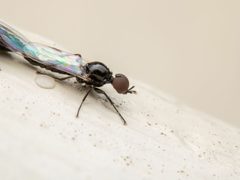
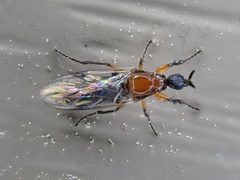
Dilophus tibialis is a of march fly in the Bibionidae. It is one of approximately 15-18 Dilophus species recognized in North America north of Mexico. The Dilophus is distinguished from the similar genus Bibio by having a ring of shorter teeth on the tibiae rather than long spurs. Species in this genus are typically smaller and less robust than Bibio, and often exhibit reddish coloration rather than black.
Pronunciation
How to pronounce Dilophus tibialis: /dɪˈloʊfəs tɪˈbaɪəlɪs/
These audio files are automatically generated. While they are not always 100% accurate, they are a good starting point.
Identification
Dilophus tibialis can be distinguished from the related Bibio by the presence of a ring of shorter teeth on the tibiae of the front legs, rather than the pair of long, downcurved spurs characteristic of Bibio. Dilophus are generally smaller and less robust than Bibio, and frequently display reddish coloration. The specific epithet "tibialis" refers to the tibial characters that help define this species. Accurate identification to species level within Dilophus typically requires examination of male genitalia.
Images
Habitat
Larval stages develop in soil, feeding on decaying organic matter. are associated with open where swarming occurs.
Distribution
North America. Specific distribution details for D. tibialis are not well documented in the available sources, though the Dilophus occurs across North America.
Seasonality
Diet
Larvae feed on decaying plant material, manure, compost, and occasionally on roots of grasses and herbs.
Life Cycle
Females use their modified tibiae to dig into soil and deposit in masses of 200-300. Larvae develop in soil, feeding on organic matter. Mature larvae likely overwinter, pupating in early spring. are short-lived, with a lifespan of approximately 2-3 days.
Behavior
Males gather in swarms near the ground and low vegetation to attract females. Mating pairs may remain conjoined for extended periods. do not bite or sting.
Ecological Role
Larvae function as decomposers, breaking down decaying plant material and organic matter in soils. They contribute to nutrient cycling and soil formation. Occasionally, larvae may act as minor pests of grasses and cereal crops when feeding on roots.
Human Relevance
Generally of minimal direct impact to humans. Not known to bite or sting. Potential for minor agricultural damage when larval are high and feed on crop roots. Not associated with structural damage or transmission.
Similar Taxa
- Bibio spp.Similar appearance and swarming , but distinguished by long spurs on front tibiae rather than rings of short teeth; generally larger and more robust with black coloration rather than reddish.
- Plecia nearctica (lovebug)Also in Bibionidae and exhibits prolonged mating , but restricted to Atlantic and Gulf coastal states; have distinctive red and black body.
More Details
Taxonomic note
The Catalogue of Life lists this as "Dilophus tibialistibialis" with authorship Loew, 1870, while GBIF and iNaturalist recognize it as "Dilophus tibialis". This appears to be a case of variant for the same .
Identification challenges
Historical of Bibionidae relied heavily on variable characters such as leg color and hair , leading to synonymization of many former . Reliable species-level identification now depends on examination of male genitalia.
Sources and further reading
- BugGuide
- GBIF taxonomy match
- iNaturalist taxon
- Catalogue of Life
- And Then There Were Three: New Termite Species Identified in California
- Bug Eric: March Flies in May
- New Method Makes for Faster Genetic ID of Eastern U.S. Termites
- Western U.S. Has More Subterranean Termite Species Than Previously Thought, Study Shows
- Bug of the Week