
Dilophus spinipes
Say, 1823
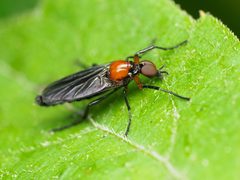
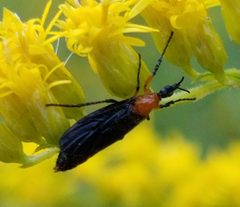
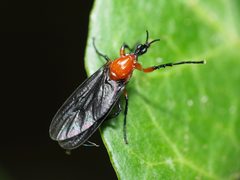
Dilophus spinipes is a of march fly in the Bibionidae, first described by Thomas Say in 1823. The Dilophus is distinguished from the related genus Bibio by having a ring of shorter teeth on the forelegs rather than long spurs. Members of this genus are typically smaller and less robust than Bibio, often with reddish coloration. Like other bibionids, are short-lived and emerge in large numbers during spring months.
Pronunciation
How to pronounce Dilophus spinipes: /dɪˈloʊfəs ˈspaɪnɪpiːz/
These audio files are automatically generated. While they are not always 100% accurate, they are a good starting point.
Identification
Dilophus differ from the similar Bibio by possessing a ring of shorter teeth on the forelegs instead of the long, downcurved spurs characteristic of Bibio. Dilophus are generally smaller and less robust than Bibio, and frequently exhibit reddish coloration rather than black. Specific identification to species level within Dilophus requires examination of male genitalia.
Images
Seasonality
emerge in spring, with peak activity typically occurring in April and May.
Diet
Larvae feed on decaying organic matter in soil, including decaying plant material, manure, compost, and occasionally roots of grasses and herbs.
Life Cycle
Females use their toothed forelegs to dig into soil where they deposit in masses of 200-300. Larval stages develop in soil, feeding on decaying matter. Mature larvae likely overwinter, pupating in early spring.
Behavior
Males gather in large swarms near the ground and low vegetation to attract females. are short-lived, with a lifespan of only a few days.
Ecological Role
Larvae function as decomposers in soil , breaking down decaying plant material and organic matter.
Similar Taxa
- BibioBibio are larger, more robust, and possess long downcurved spurs on the forelegs rather than rings of short teeth; they are typically black rather than reddish.
- PleciaLovebugs in the Plecia are known for flying in copula for extended periods and are primarily found along Atlantic and Gulf coasts; they have different body proportions and .