
Bibio slossonae
Cockerell, 1909
March fly
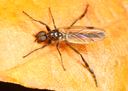
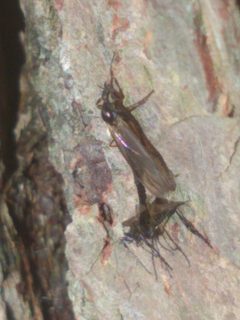
Bibio slossonae is a of March fly in the Bibionidae, described by Cockerell in 1909. Like other members of its , it exhibits pronounced in structure. The species has been documented as a of witch-hazel (Hamamelis virginiana), representing a notable plant-insect interaction.
Pronunciation
How to pronounce Bibio slossonae: /ˈbɪbioʊ ˈslɔːsəˌniː/
These audio files are automatically generated. While they are not always 100% accurate, they are a good starting point.
Identification
Males possess large, spherical, that meet at the top of the , while females have disproportionately small heads relative to body size. The Bibio is distinguished from similar Diptera by a pair of stout, downcurved spurs on the tibia of the first leg; females use these spurs for digging into soil to oviposit.
Images
Distribution
Documented from Vermont and other parts of the United States. GBIF records indicate presence in the northeastern United States.
Diet
Larvae are , feeding on decaying organic matter in soil. have been observed feeding on nectar and are documented of witch-hazel.
Host Associations
- Hamamelis virginiana - are documented of this plant
Life Cycle
Females use stout tibial spurs to excavate soil several inches deep, depositing in masses of 200–300. Larval development occurs in soil, feeding on decaying matter. Mature larvae likely overwinter, with and in spring.
Behavior
Males form swarms near the ground and low vegetation to attract females. Mating pairs may remain conjoined for extended periods, a common in Bibionidae.
Ecological Role
Larvae function as decomposers, processing decaying plant material in soil. serve as , with documented role in witch-hazel .
Similar Taxa
- DilophusSimilar body form but possesses a ring of shorter teeth on front legs rather than long spurs; typically smaller, less robust, and often reddish rather than black
- Plecia nearcticaAlso in Bibionidae but exhibits distinct red and black body coloration; famous for massive spring and fall emergences in southeastern United States that create vehicular hazards
More Details
Nomenclature
Named in honor of Annie Trumbull Slosson (1838–1926), an American entomologist and author who made significant contributions to the study of Diptera.