
Bibio lanigerus
Wiedemann, 1818
Shaggy St Mark's Fly
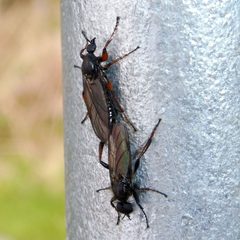
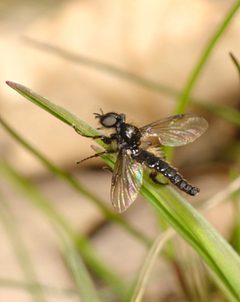
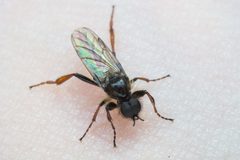
Bibio lanigerus, commonly known as the Shaggy St Mark's Fly, is a of march fly in the Bibionidae. It occurs across the Palearctic region, with confirmed records from Belgium and other parts of Europe. As with other Bibio species, emerge in spring and males form swarming to attract mates.
Pronunciation
How to pronounce Bibio lanigerus: /ˈbɪbi.oʊ læˈnɪdʒərəs/
These audio files are automatically generated. While they are not always 100% accurate, they are a good starting point.
Identification
Males have large, spherical that meet at the top of the ( condition), while females have noticeably smaller heads relative to body size. The can be distinguished from similar Bibio species by male genitalia characteristics, though this requires dissection. Like other march flies, it possesses a pair of stout, downcurved spurs at the end of the tibia on the first leg, used by females for digging into soil to deposit .
Images
Distribution
Palearctic region. Confirmed present in Belgium (including Brussels-Capital Region, Flemish Region, and Walloon Region).
Seasonality
emerge in spring, with peak activity typically in April and May.
Life Cycle
Females use their foreleg spurs to dig several inches into soil, where they deposit in masses of 200-300. Larval stages feed on decaying organic matter in rich soils. Mature larvae likely overwinter, pupating in early spring.
Behavior
Males gather in dense swarms near the ground and low vegetation to attract females. Females select mates from these . Prolonged copulation and post-copulatory guarding by males has been observed in related Bibio .
Ecological Role
Larvae contribute to soil decomposition by feeding on decaying plant material. may feed on nectar.
Similar Taxa
- Bibio marci (St Mark's Fly)Similar spring and swarming ; distinguished by differences in male genitalia and possibly leg coloration
- Dilophus speciesSimilar Bibionidae but have rings of short teeth rather than long spurs on forelegs, are generally smaller and less robust, and often reddish rather than black
More Details
Nomenclature note
The "Shaggy St Mark's Fly" distinguishes this from the more widely known Bibio marci (St Mark's Fly), though specific epithet references to lanigerus (woolly/hairy) suggest possible hair differences