
Bibio atripilosus
James, 1936
March fly
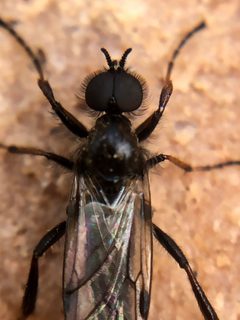
Bibio atripilosus is a of march fly in the Bibionidae, described by James in 1936. Like other members of the Bibio, it is likely a spring-emerging dipteran with larvae that develop in soil. are probably short-lived and do not feed extensively, with mating forming in open areas. The species epithet 'atripilosus' suggests black pilosity (hairiness), though specific diagnostic features distinguishing it from require examination of male genitalia.
Pronunciation
How to pronounce Bibio atripilosus: /ˈbɪbi.oʊ ˌætrɪpɪˈloʊsəs/
These audio files are automatically generated. While they are not always 100% accurate, they are a good starting point.
Identification
Bibio atripilosus belongs to a characterized by males with large, that meet at the top of the , and females with disproportionately small heads. -level identification within Bibio historically relied on leg color, hair , and other variable characters, but reliable separation requires examination of male genitalia. The specific epithet 'atripilosus' (black-haired) suggests dense black setation. The genus is distinguished from the similar genus Dilophus by the presence of long, stout, downcurved spurs on the fore tibiae (Dilophus has rings of shorter teeth instead).
Images
Habitat
Based on -level , likely associated with open, grassy areas and rich soils where larvae can develop. probably emerge in areas with bare ground or low vegetation suitable for mating swarms.
Seasonality
Presumably spring-emerging, as is typical for the Bibio in North America, though specific for this is undocumented.
Similar Taxa
- Bibio vestitusAnother black-haired in the same , potentially overlapping in distribution and requiring genital examination for separation.
- Bibio albipennisSimilar spring-emerging march fly, distinguished by wing coloration and other subtle characters.
- Dilophus sayiSimilar (Bibionidae) but distinguished by shorter, toothed fore tibial spurs rather than long downcurved spurs, and generally smaller, more slender build.
More Details
Taxonomic note
The epithet 'atripilosus' is Latin for 'black-haired,' referring to a presumably diagnostic setal character. The Bibio underwent significant taxonomic revision, with many former species synonymized based on intraspecific variation in color and pilosity. B. atripilosus has survived these revisions, suggesting it represents a valid, distinguishable entity, though published diagnostic descriptions are sparse.
Data scarcity
This is known from only 6 observations on iNaturalist and lacks a Wikipedia entry. Published biological information appears to be minimal, with most knowledge inferred from -level studies of Bibio.