
Bibio alexanderi
James, 1936
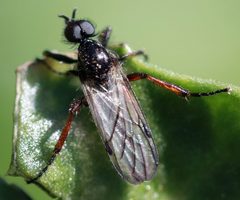
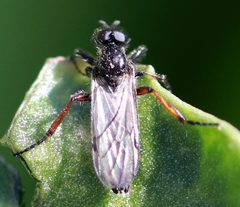
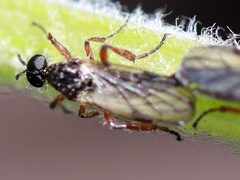
Bibio alexanderi is a of march fly in the Bibionidae, described by James in 1936. Like other members of the Bibio, emerge in spring and form large mating swarms. The species belongs to a group of flies whose larvae are decomposers in soil . Adult Bibio flies are non-biting and do not feed extensively, with their primary activity focused on .
Pronunciation
How to pronounce Bibio alexanderi: /ˈbɪbi.oʊ ˌæləɡˈzændəri/
These audio files are automatically generated. While they are not always 100% accurate, they are a good starting point.
Identification
Males possess large, spherical that meet at the top of the , while females have disproportionately small heads relative to body size. A key diagnostic feature for the Bibio is the presence of a pair of stout, downcurved spurs at the apex of the tibia on the first leg; females use these spurs for digging into soil to oviposit. -level identification within Bibio historically relied on variable characters such as leg coloration and hair , but these traits have proven unreliable. Definitive identification of B. alexanderi requires examination of male genitalia. The genus can be distinguished from the similar Dilophus by the latter's ring of shorter teeth (rather than long spurs) on the forelegs and generally smaller, less robust, often reddish body.
Images
Habitat
are found in open areas where males form swarms near the ground and low vegetation. Larvae develop in rich soils containing decaying organic matter, manure, compost, and grass or herb roots.
Distribution
North America. Specific range details for this are not well documented in the provided sources.
Seasonality
emerge in spring, with peak activity in April and May in at least some regions.
Diet
Larvae feed on decaying organic matter in soil, manure, compost, and on roots of grasses and herbs. have reduced or nonexistent feeding; some bibionids have been observed taking nectar.
Life Cycle
Females use their spurred forelegs to excavate several inches into soil, where they deposit masses of 200–300 eggs. Larvae develop in the soil, feeding on organic matter and sometimes roots. Mature larvae likely overwinter, with occurring in early spring and following shortly thereafter.
Behavior
Males form dense swarms near the ground to attract females. Mating pairs may remain coupled for extended periods.
Ecological Role
Larvae function as decomposers, breaking down decaying plant material and contributing to soil nutrient cycling. Occasional root feeding may cause minor pest status in agricultural settings.
Human Relevance
Generally none. Not a biting pest. No documented nuisance impacts for this specific , though related bibionids can occur in large numbers.
Similar Taxa
- Bibio spp. (other species)Other Bibio share the -level characters of males, small-headed females, and foreleg spurs; distinguished primarily by male genitalia
- Dilophus spp.Similar body plan but forelegs bear a ring of short teeth rather than long curved spurs; generally smaller, less robust, and often reddish rather than black
- Plecia nearctica (lovebug)Also Bibionidae but flies in copula for days, has red and black body, restricted to Atlantic and Gulf coastal states