
Scenopinus
Latreille, 1802
window flies
Species Guides
1- Scenopinus fenestralis(window fly)
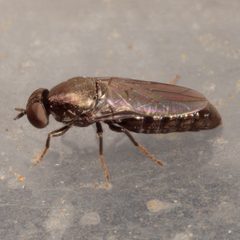
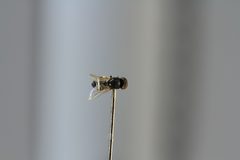
Scenopinus is a of small flies in the Scenopinidae, commonly known as window flies. are typically dark-colored with clear wings and are associated with bird nests, buildings, and forest . Larvae are predatory, feeding on other arthropods including and larvae. The genus occurs across the Palaearctic region, with records from Europe and forest zones.
Pronunciation
How to pronounce Scenopinus: /sɛˈnɒpɪnəs/
These audio files are automatically generated. While they are not always 100% accurate, they are a good starting point.
Identification
Small dark flies with clear wings and bicolored legs (dark , paler tibiae). Distinguished from similar Diptera by combination of: compact body, window-fly habit of resting on building surfaces, and association with bird nests or old structures. Some have completely black , useful for separating from . of S. jerei occur mid- to end June. Identification to species level requires examination of leg coloration and haltere pigmentation.
Images
Appearance
Small flies, 4–6 mm in length. Body dark brown to black. Wings clear, unpatterned. Legs often bicolored: dark and contrasting with paler yellow to orange tibiae. completely black in some . Overall compact, somewhat inactive posture.
Habitat
forest environments, particularly in association with nests of cavity-nesting birds. Frequently found in and around human structures: old buildings, outhouses, unheated buildings, and on window surfaces. Larvae develop in bird nest boxes and natural cavities.
Distribution
Palaearctic distribution. Recorded from Finland, Sweden, Denmark, Norway, Russian Karelia, and Central and Southern England. Core range appears to be the forest zone, with some extending into more temperate European regions.
Seasonality
active mid- to end June in regions. Year-round presence possible in association with heated or sheltered buildings.
Diet
Larvae are predatory, feeding on larvae of clothes moths (Tineidae), fleas, and other small .
Host Associations
- Strix aluco (tawny owl) - larval development in nest boxesS. jerei reared from nest box material
- cavity-breeding birds (tits, owls) - larval development in nestsgeneral association across
Life Cycle
Larvae develop in nests of cavity-nesting birds, including both natural cavities and artificial nest boxes. Larvae have been reared from nest box material collected in 2013 and 2018. emerge in mid-summer. and detailed developmental stages not described.
Behavior
tend to be inactive, often found resting on windows of old buildings. Adults collected indoors have been taken directly to vials, suggesting limited activity when disturbed. Larvae remain within bird nest substrates.
Ecological Role
Predatory component of bird nest in forest . Larvae contribute to regulation of of clothes moths and fleas within nest microhabitats.
Human Relevance
Occasional presence in buildings, particularly older structures. Larval on clothes moth larvae may provide minor benefit in protecting stored materials and bird nest boxes.
Similar Taxa
- Scenopinus vitripennisS. jerei was previously misidentified as this ; distinguished by bicolored legs and completely black
More Details
Taxonomic history
in this have been historically overlooked due to elusive and limited taxonomic information about Scenopinidae. S. jerei was not recognized as distinct until 2021 despite occurring across a broad range.
Genomic resources
First assembly for Scenopinidae generated for S. jerei: 345.25 Mb -level assembly (haplotype 1), 232.44 Mb scaffold-level assembly (haplotype 2), and 16.52 kb mitochondrial genome. Part of Darwin Tree of Life project.
Conservation status
S. jerei assessed as Least Concern () in Finland due to broad distribution and abundance of suitable forest .