
Systoechus solitus
(Walker, 1849)
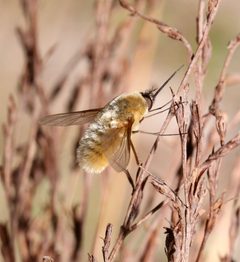
Systoechus solitus is a of bee fly ( Bombyliidae) distributed across the southeastern United States from New Jersey to Florida and Louisiana. are active in fall, distinguishing them from the spring-active Bombylius with which they share tribe Bombyliini. The larvae are of , a relatively uncommon feeding strategy among bee flies.
Pronunciation
How to pronounce Systoechus solitus: /ˈsɪstoʊ.ɛkəs soʊˈlaɪtəs/
These audio files are automatically generated. While they are not always 100% accurate, they are a good starting point.
Identification
Distinguished from the related Bombylius by wing venation, specifically the position of the r-m . are active in fall, whereas Bombylius tend to be spring-active. The genus Systoechus can be separated from Bombylius by this seasonal activity pattern and subtle wing venation characters, though precise identification to species level may require examination of additional morphological features.
Images
Habitat
Associated with sandy ground and sand prairie remnants. One observation records an individual resting on sandy ground in a sand prairie in the Mississippi lowlands of southeastern Missouri.
Distribution
Southeastern United States, ranging from New Jersey south to Florida and west to Louisiana.
Seasonality
active in fall, in contrast to spring-active Bombylius .
Diet
Larvae are of . feeding habits are not documented.
Life Cycle
Larval stage develops as of . Details of egg deposition, , and complete developmental timeline are not documented.
Behavior
are skittish and difficult to approach, sharing this behavioral trait with other bee flies. One observed individual was noted resting on sandy ground.
Ecological Role
Larval on may contribute to natural regulation of grasshopper in southeastern U.S. .
Similar Taxa
- BombyliusShares tribe Bombyliini and similar overall appearance, but distinguished by spring activity, different wing venation (r-m position), and different larval .
More Details
Taxonomic notes
The Systoechus and Bombylius are distinguished by wing venation characters, particularly the position of the r-m , though this can be difficult to assess from photographs. Seasonal activity patterns provide a useful field character for separation: Systoechus in fall, Bombylius in spring.