
Aphoebantus
Loew, 1872
bee flies
Species Guides
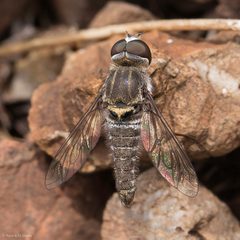
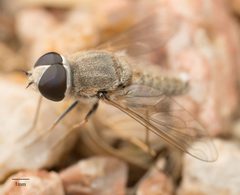
10Aphoebantus is a of bee flies ( Bombyliidae) containing at least 80 described . The genus was established by Loew in 1872 and is classified within the Anthracinae and tribe Aphoebantini. Some taxonomic authorities consider Epacmus to be a synonym or subset of Aphoebantus rather than a distinct genus. The genus is characterized by small, fuzzy bee flies that exhibit potential mimicry of jumping spiders.
Pronunciation
How to pronounce Aphoebantus: //æˈfiːbæntəs//
These audio files are automatically generated. While they are not always 100% accurate, they are a good starting point.
Images
Habitat
Juniper woodland, as documented by field observations in New Mexico. The likely occupies diverse given its , but specific habitat associations for most remain undocumented.
Distribution
Documented from North America including New Mexico and Colorado. The likely has a broader distribution corresponding to the range of the Bombyliidae, but precise geographic limits for the genus and most constituent are not well established.
Diet
feed on nectar from flowers. Larval feeding habits are unknown for most , but bombyliid larvae are typically or of other insects.
Host Associations
- Juniperus - Observed in juniper woodland in New Mexico; specific relationship unclear
Life Cycle
Complete with , larva, pupa, and stages typical of Diptera. Detailed information specific to Aphoebantus is not documented.
Behavior
have been observed visiting flowers. One (or related formerly placed in Epacmus) exhibits potential mimicry, with four black hemispherical bumps on the rear of the resembling the of jumping spiders (Salticidae) when viewed from behind.
Ecological Role
may contribute to pollination through flower visitation. Larval is poorly known but likely involves or of other insects based on -level characteristics.
Similar Taxa
More Details
Taxonomic Uncertainty
The generic limits of Aphoebantus remain under study. The Epacmus, described separately, has been suggested by at least one bombyliid to represent a synonym or subset of Aphoebantus rather than a distinct genus. This taxonomic issue affects -level identifications and nomenclatural stability.
Predator Mimicry
A bee fly identified as Epacmus sp. (potentially Aphoebantus) exhibits apparent mimicry of jumping spider through four black, polished, hemispherical bumps on the rear of the . This represents a case of potential mimicry, where the prey mimics its predator to avoid detection or attack.