
Laphria sacrator
Walker, 1849
Bee-mimic robberfly, Yellow-waisted Laphria
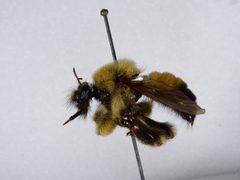
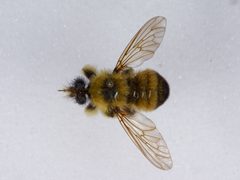
Laphria sacrator is a robber fly in the Asilidae, commonly known as the -mimic robberfly or Yellow-waisted Laphria. The exhibits mimicry, with yellow hairs on the mystax, , and portions of the . It belongs to a renowned for producing highly convincing bee mimics that deceive both and prey.
Pronunciation
How to pronounce Laphria sacrator: //ˈlæf.ri.ə ˈsæk.ræ.tɔr//
These audio files are automatically generated. While they are not always 100% accurate, they are a good starting point.
Identification
Laphria sacrator can be distinguished from other robber flies by its prominent yellow hairs on the mystax (the beard-like area on the ), , and portions of the , combined with some red hairs. The overall -like appearance separates it from non-mimetic asilids. Within the Laphria, identification to level requires close examination of hair coloration and pattern. It differs from Mallophora, another bumble bee mimic genus, by having thick rather than thin terminal segments.
Images
Distribution
Recorded from Vermont and Wisconsin in the United States.
Behavior
Similar Taxa
- MallophoraAlso contains mimics, but distinguished by thin terminal antennal segments and generally hairier bodies
- Sphecomyia vittataSyrphid fly that mimics yellowjackets; belongs to different (Syrphidae) with only one pair of wings and shorter
- Microstylum morosumLarge robber fly but not a mimic; lacks yellow abdominal banding and has emerald and nearly hairless body