
Laphria grossa
(Fabricius, 1775)
giant laphria
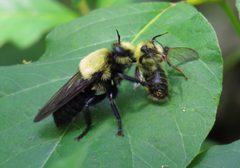
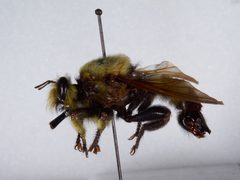
Laphria grossa, commonly known as the giant laphria, is a of robber fly in the Asilidae. It belongs to a noted for effective mimicry, with species in this group recognized as among the most realistic mimics of bumble bees. The species was originally described by Fabricius in 1775 under the basionym Asilus grossus.
Pronunciation
How to pronounce Laphria grossa: /ˈlæfriə ˈɡrɔsə/
These audio files are automatically generated. While they are not always 100% accurate, they are a good starting point.
Identification
Distinguished from other large robber flies by its -like appearance. Within the Laphria, are characterized by thick , in contrast to the related genus Mallophora which has a thin terminal antennal segment and generally hairier body. The giant laphria is notably large among Laphria species, consistent with its specific epithet.
Images
Similar Taxa
- Mallophora spp.Both are effective mimics; distinguished by Mallophora's hairier body and thin terminal antennal segment versus Laphria's thick
- Promachus hineiAnother large robber fly sometimes called 'giant robber fly'; distinguished by different body proportions and lack of mimicry
- Microstylum morosumNorth America's largest robber fly; distinguished by much larger size (35–50 mm), streamlined nearly hairless body, and emerald rather than -like appearance