
Comantella
Curran, 1923
Species Guides
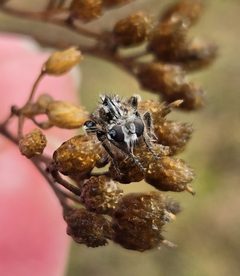
4Comantella is a of small to medium-sized robber flies (Asilidae) comprising four recognized . are distinguished by their humpbacked profile, long body hair, and a distinctive "mane" or crest on the . They exhibit an unusual seasonal pattern, appearing among the earliest and latest active flies in their range. The genus occurs in western North America, with individual species showing discrete geographic distributions. Taxonomic revision has been suggested by due to current identification challenges.
Pronunciation
How to pronounce Comantella: /kɔmænˈtɛlə/
These audio files are automatically generated. While they are not always 100% accurate, they are a good starting point.
Identification
Distinguished from similar asilid by the combination of: humpbacked lateral profile; long, dense body and leg hair; thoracic crest or 'mane'; and a slender spur on the front tibia. Seasonal timing (early spring and late fall activity) provides additional separation from sympatric genera. identification relies on relative length of the terminal style compared to the third antennal segment, plus body hair coloration. May be confused with Eucyrtopogon; the front tibial spur and thoracic crest help separate Comantella.
Images
Habitat
Open with bare ground; individuals perch on soil surface rather than vegetation. Vast open fields are typical sites. Specific microhabitat associations beyond open ground are not documented.
Distribution
Western North America. C. pacifica: British Columbia to Nevada and Utah. C. cristata: Idaho and California. C. rotgeri: Colorado, New Mexico, and Alberta. C. fallei: California and Colorado. Eastern Colorado (Front Range) represents a known area of abundance.
Seasonality
active in early spring and late fall; among the first flies active in spring and among the last in fall. In Colorado, observed from early March through late November. Adult in protected places is suspected but not confirmed.
Behavior
Perches on bare ground, rarely on vegetation. Predatory; one observation documents C. fallei capturing a small wolf spider (Pardosa sp.).
Ecological Role
of small arthropods; specific ecological impact unquantified.
Similar Taxa
- EucyrtopogonSimilar small asilid ; Comantella distinguished by front tibial spur and thoracic 'mane'
- Bibionidae (march flies)Superficial resemblance in body form; Comantella distinguished by predatory and asilid characteristics including the front tibial spur
More Details
Taxonomic Status
The is considered to be in need of revision by asilid . Current keys rely on subtle characters that may not reflect natural groupings.
Biological Knowledge
details including larval , , and confirmed strategy remain unknown. The observation of spider represents the only documented prey record for the .