
Comantella pacifica
Curran, 1926
Comantella pacifica is a of robber fly in the Asilidae, described by Curran in 1926. It is one of four recognized species in the Comantella, which is characterized by unusual seasonal activity patterns and distinctive morphological features. The species is found in western North America from British Columbia south to Nevada and Utah. are active in early spring and late fall, an unusual pattern among robber flies.
Pronunciation
How to pronounce Comantella pacifica: /kəˈmænˌtɛlə pəˈsɪfɪkə/
These audio files are automatically generated. While they are not always 100% accurate, they are a good starting point.
Identification
Distinguished from other Comantella by the length of the terminal style relative to the third antennal segment and body hair coloration. The Comantella is separated from similar Asilidae genera by the combination of: slender spur on the tip of the front tibia, humpbacked profile, and unusual early spring and late fall activity. Resembles march flies (Bibionidae) in general appearance but exhibits predatory typical of robber flies.
Images
Appearance
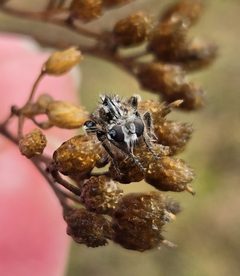
Small to medium-sized robber fly, 10-15 mm in length. Body covered in long hair, including on the legs. features a prominent "mane" of erect hairs resembling a Mohawk hairstyle. Humpbacked in profile. Front tibia bears a slender spur at the tip. Terminal style length relative to third antennal segment and body hair coloration are used in identification within the .
Habitat
Open fields and meadows with bare soil. Perches on the ground, rarely on vegetation. Vast open fields are preferred.
Distribution
Western North America: British Columbia south to Nevada and Utah.
Seasonality
active in early spring and late fall. Among the first flies seen in spring and among the last in fall. Mating pairs have been observed in mid-March. Adults suspected to overwinter in protected places.
Behavior
Perches on bare soil in open fields. Predatory, like other robber flies. One observation of C. fallei (congeneric ) documents on a small wolf spider (Pardosa). suspected to overwinter in protected places, explaining the unusual early spring and late fall activity pattern.
Ecological Role
of other small arthropods. Specific ecological role largely undocumented due to limited biological study.
Similar Taxa
- Comantella falleiOverlaps in range (California and Colorado); distinguished by terminal style length and body hair coloration
- Comantella rotgeriOverlaps in range (Colorado, New Mexico, Alberta); distinguished by terminal style length and body hair coloration
- Comantella cristataSimilar ; found in Idaho and California; distinguished by terminal style length and body hair coloration
- Bibionidae (march flies)Similar general appearance but distinguished by predatory and morphological details of Asilidae
More Details
Taxonomic status
The Comantella is considered to be in need of taxonomic revision by asilid experts. Current keys rely heavily on terminal style length relative to the third antennal segment and body hair coloration.
Biological knowledge gaps
Little is known concerning the of Comantella pacifica specifically, including larval , prey range, and detailed . Most biological inferences are drawn from congeneric or general Asilidae characteristics.