
Eucyrtopogon
Curran, 1923
Species Guides
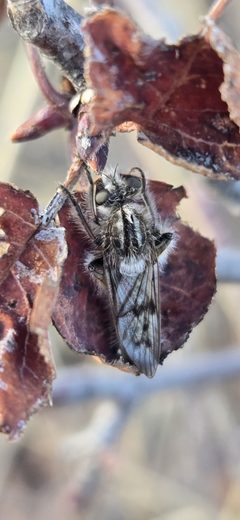
12Eucyrtopogon is a of robber flies ( Asilidae) established by Curran in 1923. These small to medium-sized predatory flies are morphologically similar to the genus Comantella, with which they have been confused in field observations. The genus is poorly studied, with limited biological information available. -level relies on subtle morphological characters including antennal proportions and body hair coloration.
Pronunciation
How to pronounce Eucyrtopogon: //juːˌsɪrtəˈpoʊɡən//
These audio files are automatically generated. While they are not always 100% accurate, they are a good starting point.
Identification
Eucyrtopogon closely resembles Comantella in general habitus—both are small to medium-sized Asilidae with long body hairs and a humpbacked thoracic profile. Reliable separation requires examination of specific characters: Comantella possesses a slender spur on the front tibia, while Eucyrtopogon lacks this structure. -level identification depends on the relative length of the terminal antennal style compared to the third antennal segment, and the coloration of thoracic and abdominal hairs.
Images
Distribution
Western North America. Specific distributions include: E. pacifica from British Columbia south to Nevada and Utah; E. cristata in Idaho and California; E. rotgeri in Colorado, New Mexico, and Alberta; and E. fallei in California and Colorado. The has been reported from eastern New Mexico.
Similar Taxa
- ComantellaBoth share small to medium size, long body hairs, humpbacked thoracic profile, and similar overall appearance. Eucyrtopogon lacks the slender spur on the front tibia that characterizes Comantella.
More Details
Taxonomic Uncertainty
The of Eucyrtopogon and related requires revision according to asilid . Current identification keys rely on minor morphological characters that may not reflect natural groupings.