Eucyrtopogon comantis
Curran, 1923
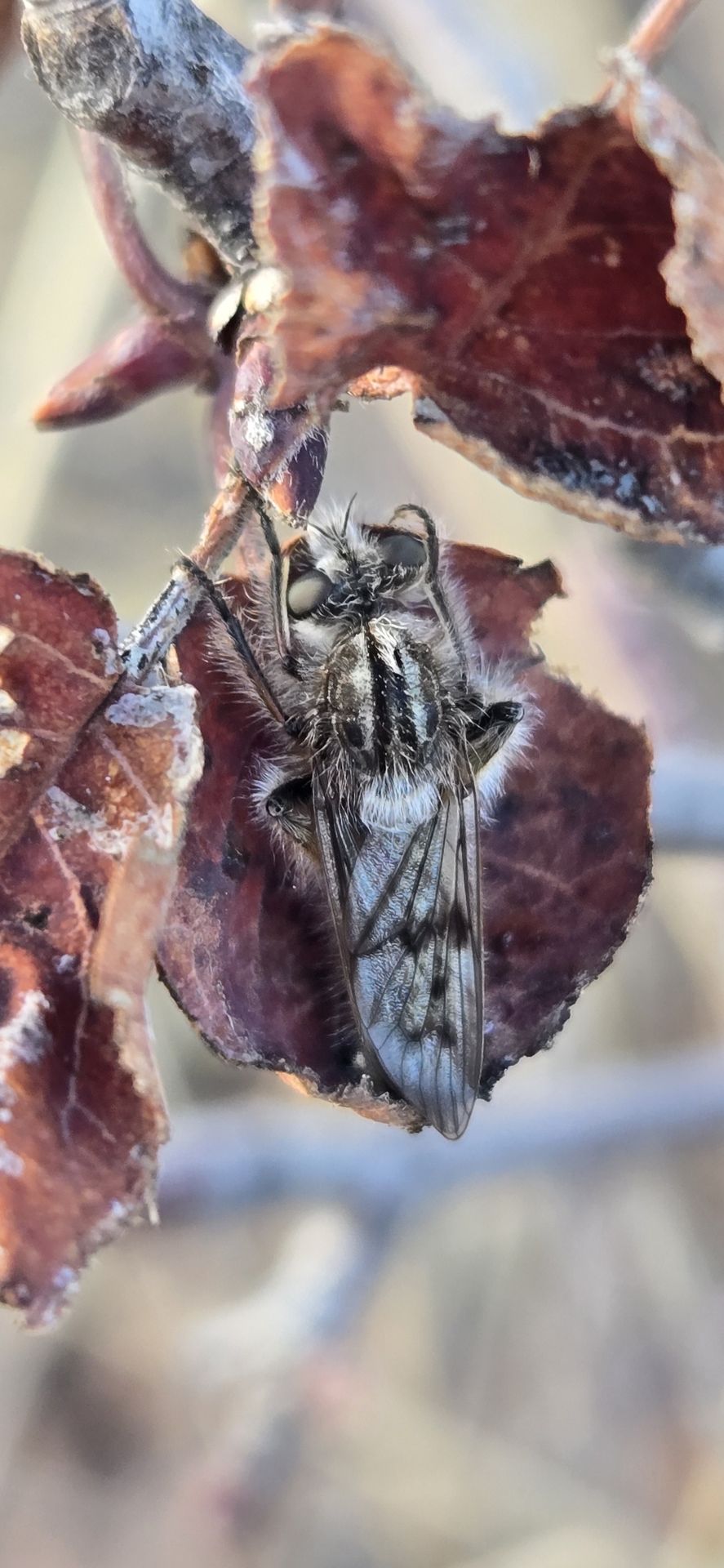
Eucyrtopogon comantis is a of robber fly in the Asilidae, described by Curran in 1923. The Eucyrtopogon is closely related to Comantella, with which it has been historically confused; both genera comprise small to medium-sized, hairy predatory flies. Very few specific details are documented for E. comantis, and most biological information must be inferred cautiously from the broader genus or family level. The species is rarely recorded, with only four observations in iNaturalist as of the data cutoff.
Pronunciation
How to pronounce Eucyrtopogon comantis: /juːˌsɜːrtəˈpoʊɡɒn koʊˈmæntɪs/
These audio files are automatically generated. While they are not always 100% accurate, they are a good starting point.
Identification
Eucyrtopogon are distinguished from the similar Comantella by genitalic characters, particularly features of the male terminalia. Comantella species possess a slender spur on the tip of the front tibia and a distinctly humpbacked in profile; the extent to which these traits apply to Eucyrtopogon comantis specifically is unclear. Accurate identification to species within Eucyrtopogon requires examination of microscopic characters and reference to original species descriptions.
Images
Similar Taxa
- ComantellaHistorically confused with Eucyrtopogon; both are small to medium-sized, hairy Asilidae. Comantella have a slender spur on the front tibial tip and humpbacked , features used to separate the , though Eucyrtopogon may lack these traits.
More Details
Taxonomic Uncertainty
The of Eucyrtopogon and related is considered unstable. At least one expert on Asilidae has indicated that the genus Comantella (closely related to Eucyrtopogon) is in need of revision. -level keys rely on subtle characters such as relative lengths of antennal segments and body hair coloration.