
Wyliea
Martin, 1975
Bronzewings
Species Guides
1- Wyliea mydas(Mydas Bronzewing)
Wyliea is a of robber flies in the Asilidae, established by Martin in 1975. The genus is notable for with vivid aposematic or mimetic coloration, particularly Wyliea mydas, which exhibits -like coloration with a black body and red wings. These large, conspicuous flies are among the most visually striking members of the robber fly family due to their bold color patterns rather than enormous size.
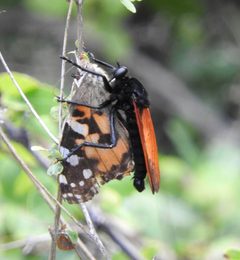
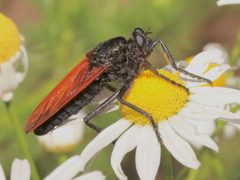
Pronunciation
How to pronounce Wyliea: /ˈwaɪliːə/
These audio files are automatically generated. While they are not always 100% accurate, they are a good starting point.
Images
Similar Taxa
- Ospriocerus abdominalisShares mimetic -like coloration with black body and red markings, but distinguished by having red abdominal coloration and black wings rather than wholly black and red wings
- Microstylum morosumBoth are among the most impressive robber flies, but M. morosum is distinguished by enormous size (35-40 mm), streamlined body, and large emerald rather than vivid aposematic coloration
- Diogmites neoternatusBoth are considered impressive robber fly , but D. neoternatus is noted for large size combined with striking green rather than mimetic coloration
- Archilestris magnificusBoth exhibit vivid aposematic or mimetic coloration, though specific distinguishing features are not detailed in available sources
- Eccritosia zamonBoth exhibit vivid aposematic or mimetic coloration, though specific distinguishing features are not detailed in available sources
More Details
Taxonomic Status
GBIF lists the status as 'DOUBTFUL' with a HIGHERRANK match type, suggesting potential taxonomic uncertainty or pending revision. The genus was established by Martin in 1975.
Observational Data
iNaturalist records 107 observations for this , indicating it is documented in citizen science databases though not exceptionally common.