
Tolmerus
Loew, 1849
Species Guides
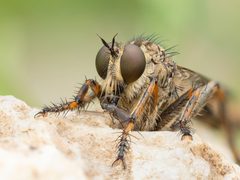
1Tolmerus is a of robber flies ( Asilidae) comprising approximately 19 described . The genus is characterized by predatory that hunt flying insects and larvae that develop in soil or decaying organic matter. At least one species, Tolmerus cingulatus, has been the subject of genomic sequencing, revealing a 280 Mb with 12,047 protein-coding genes. Some species are considered rare or have restricted distributions, with limited records from specific regions such as Schleswig-Holstein in Germany.
Pronunciation
How to pronounce Tolmerus: /tɒlˈmɛrəs/
These audio files are automatically generated. While they are not always 100% accurate, they are a good starting point.
Identification
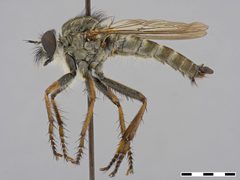
within Tolmerus can be distinguished by antennal length, patterning on abdominal tergites, and . For example, T. cingulatus differs from the similar T. atricapillus by its shorter antennal arista, less marked tergites, and a mix of black and whitish hairs on the frons rather than predominantly black. body length ranges approximately 10-15 mm in at least one species.
Images
Habitat
Heathlands and coastal dunes, particularly in southern Britain. Larvae are often found in decaying organic matter and soil.
Distribution
Europe, with documented records from southern Britain (England), Schleswig-Holstein (Germany), and the East Frisian Islands. Specific distribution varies by ; some are considered very rare with few known sites.
Seasonality
active June to September in at least one (T. cingulatus).
Diet
prey on flies, small , , and aphids. Larvae are , feeding on and larvae of other insects including beetles, grasshoppers, and flies.
Life Cycle
Females lay in soil or plants. Larvae develop in decaying organic matter or soil, overwinter as larvae, then enter the soil surface to pupate. emerge in summer.
Behavior
Predatory hunting in ; larvae are also predatory/.
Ecological Role
as and larvae, contributing to regulation of insect in heathland and dune .
Similar Taxa
- MachimusSome Tolmerus , including T. cingulatus, have been retained in Machimus in UK faunas per recent taxonomic treatments (Harvey 2024; Stubbs & Drake 2014), indicating historical or ongoing taxonomic confusion between these .
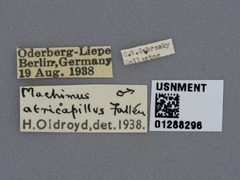
- Tolmerus atricapillusSimilar to T. cingulatus but distinguished by longer antennal , more marked tergites, and predominantly black hairs on .
More Details
Genomic Resources
A chromosomally complete sequence has been generated for Tolmerus cingulatus: 280.00 Mb assembly with 12,047 protein-coding genes, 6 chromosomal pseudomolecules (4 + XY ), and a 20.2 kb mitochondrial genome (PMC11803401).
Taxonomic Note
T. cingulatus is retained in Machimus in UK per Harvey 2024 and Stubbs & Drake 2014, reflecting differing taxonomic treatments between regional faunas.