
Machimus
Loew, 1849
Bladetails
Species Guides
20- Machimus adustus
- Machimus antimachus(Yellow-legged Bladetail)
- Machimus blantoni
- Machimus callidus(robber fly)
- Machimus delusus
- Machimus erythocnemius(White-spined Bladetail)
- Machimus fattigi
- Machimus formosus
- Machimus griseus
Machimus is a of robber flies (Asilidae) comprising approximately 188 described . The genus is nearly , absent only from Australia and New Zealand, with greatest diversity in the and southern Asia. Members are medium-sized predatory flies with varied ecological specializations, including at least one species (M. polyphemi) that is an obligate commensal of gopher tortoise burrows.
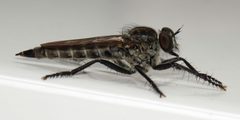

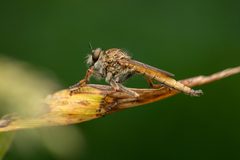
Pronunciation
How to pronounce Machimus: /ˈma.kʰi.mus/
These audio files are automatically generated. While they are not always 100% accurate, they are a good starting point.
Images
Habitat
varies by : open habitats with dry soils are common, including sandhill and longleaf pine ; some species occupy specialized microhabitats such as vertebrate burrows.
Distribution
Nearly worldwide except Australia and New Zealand; most native to and southern Asia; individual species ranges vary from widespread (Europe through Russia to Sakhalin Island and Iran) to narrowly (southeastern United States Coastal Plain).
Seasonality
activity varies by ; M. atricapillus flies from May to October with peak in July and August.
Diet
are on other insects, primarily Diptera; larvae of at least some feed on larvae (Scarabaeidae, Chrysomelidae, Curculionidae) in soil.
Host Associations
- Gopherus polyphemus (gopher tortoise) - obligate commensal (M. polyphemi inhabits tortoise burrows)One of 12 obligate commensals of gopher tortoise burrows
Life Cycle
Larvae are soil-dwelling; emerge after . Detailed developmental stages vary by and are incompletely documented.
Behavior
often perch on vantage points such as fence posts, tree trunks, foliage, or bare ground to sun themselves and ambush prey. Males of M. atricapillus possess a distinctive kite-tail-shaped projection on sternite eight used in identification.
Ecological Role
of other insects as ; larval stages contribute to soil as predators of larvae. At least one contributes to the diverse commensal supported by engineers (gopher tortoises).
Similar Taxa
More Details
Genomic resources
assembly available for M. atricapillus: 268.6 Mb with 10,978 protein-coding genes, scaffolded into six chromosomal pseudomolecules including X and Y .
Conservation note
M. polyphemi, a longleaf pine , has been documented in disturbed sandhill ; conservation status warrants attention given habitat specificity and dependence on gopher tortoise .
Sources and further reading
- BugGuide
- Wikipedia
- GBIF taxonomy match
- iNaturalist taxon
- NCBI Taxonomy
- Catalogue of Life
- The distribution and natural history of the gopher tortoise robber fly (Machimus polyphemi Bullington and Beck) (Diptera: Asilidae)
- The genome sequence of the Kite-tailed Robberfly, Machimus atricapillus (Fallén, 1814).