
Proctacanthus heros
(Wiedemann, 1828)
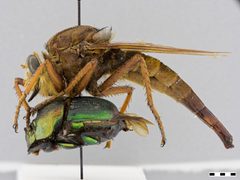
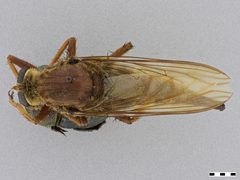
Proctacanthus heros is a of robber fly in the Asilidae. The name Proctacanthus translates to "spiny butt" or "spiny ," referring to a distinctive morphological feature. Like other members of the genus, it is a large, predatory fly. The specific epithet heros derives from Greek mythology, meaning "hero" or "champion."

Pronunciation
How to pronounce Proctacanthus heros: /ˌprɒk.təˈkæn.θəs ˈhɪə.rɒs/
These audio files are automatically generated. While they are not always 100% accurate, they are a good starting point.
Identification
Members of the Proctacanthus can be recognized by their large size and prominent facial beard (mystax). The name heros can be distinguished from by examination of leg coloration and abdominal patterning, though precise diagnostic features require reference. The genus is characterized by the eponymous spiny terminal abdominal segments.
Images
Habitat
Based on -level documentation, Proctacanthus are associated with sandy or loose soil where females oviposit in ground crevices. Larvae burrow into soil to develop.
Life Cycle
Females deposit in soil crevices. Larvae are soil-dwelling and reportedly feed on soil insects, roots, and decaying organic matter before pupating in unlined within the soil.
Ecological Role
As a predatory robber fly, likely functions as an apex aerial of other insects within its .
Similar Taxa
- Proctacanthus milbertiiSimilar large size, prominent beard, and overall gestalt; distinguished by -specific coloration patterns and geographic/temporal distribution
- Proctacanthus fulviventrisShares large size and nominate characteristics; P. fulviventris has distinctive bright yellow beard, black with red tibiae, and reddish abdominal
- Promachus speciesSimilar large predatory robber flies with comparable habits; Promachus often exhibit yellow and black tiger striping on and differ in leg coloration
More Details
Etymology
The generic name Proctacanthus combines Greek "proktos" (, buttocks) with "akantha" (thorn, spine), literally "spiny butt." The specific epithet heros refers to a hero or champion from Greek mythology.
Sources and further reading
- BugGuide
- Wikipedia
- GBIF taxonomy match
- iNaturalist taxon
- Catalogue of Life
- Of Lady Beetles and Green Fruit Beetle Larvae | Bug Squad
- One-Shot Wednesday—Proctacanthus fulviventris ovipositing | Beetles In The Bush
- Oklahoma is More than OK for Burying Beetles
- Magnificently Monstrous Muscomorphs | Beetles In The Bush