
Apiocera
Westwood, 1835
Flower-loving Flies
Species Guides
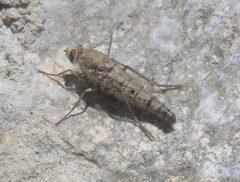
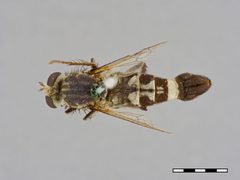
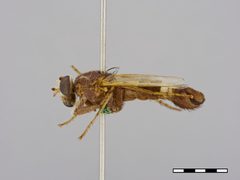
6Apiocera is the sole in the Apioceridae, comprising approximately 150 of flies commonly known as flower-loving flies. The genus is divided into four subgenera, each restricted to a different continent: Apiocera (Australia), Ripidosyrma (southern Africa), Pyrocera (North America), and Anypenus (South America). Despite their , most species do not visit flowers. The family was historically broader, with other genera now transferred to Mydidae.
Pronunciation
How to pronounce Apiocera: //ˌæp.i.oʊˈsɪə.rə//
These audio files are automatically generated. While they are not always 100% accurate, they are a good starting point.
Identification
Apiocera can be distinguished from similar flies by their elongate body form and sponge-like mouthparts adapted for liquid feeding. The is separated into subgenera primarily by geographic distribution and subtle morphological differences in wing venation and genitalia structure. -level identification requires examination of male genitalia and wing characters; recent taxonomic revisions provide keys for Australian species. They may be confused with Mydidae, from which they differ in wing venation and larval preferences.
Images
Habitat
Sandy, arid and semiarid environments including deserts and coastal dunes. are found running on ground near sparse vegetation or feeding on honeydew beneath -infested plants. Larvae of at least one (A. maritima) inhabit sand near the high-water mark of coastal beaches.
Distribution
Disjunct distribution across four continents: Australia (nominate subgenus Apiocera), southern Africa (subgenus Ripidosyrma), North America (subgenus Pyrocera), and South America (subgenus Anypenus). Each subgenus is to its respective region.
Diet
feed on honeydew from -infested plants and drink from damp sand using sponge-like mouthparts. Flower visitation is rare despite the .
Life Cycle
Larvae are found in sandy substrates. The only described larval is for A. maritima, which occurs in sand near the high-water mark of coastal beaches. Details of and are unknown for most .
Behavior
are primarily ground-dwelling, running on sand rather than flying. They have been observed drinking from damp sand. Activity patterns of most are poorly documented, though at least one Australian species (A. vespera) shows or tendencies as suggested by its specific epithet.
Similar Taxa
Misconceptions
The 'flower-loving flies' is misleading, as most Apiocera rarely visit flowers and instead feed on honeydew and ground moisture.
More Details
Taxonomic History
Apioceridae formerly included additional now transferred to Mydidae based on phylogenetic studies. The is now at the genus level.
Conservation Status
The North American A. barri has been designated a species of conservation concern in Missouri due to restricted in loess hilltop prairies.
Sources and further reading
- BugGuide
- Wikipedia
- GBIF taxonomy match
- iNaturalist taxon
- NCBI Taxonomy
- Catalogue of Life
- Ebenaceae | Beetles In The Bush
- Redescription of Apiocera clavator with Notes on Its Behavior (Diptera: Apioceridae)1,2
- Review of the Australian <i>Apiocera minor</i> Norris species-group (Diptera: Apioceridae) with a revised key to species