Megataphrus
Casey, 1890
cylindrical bark beetles
Species Guides
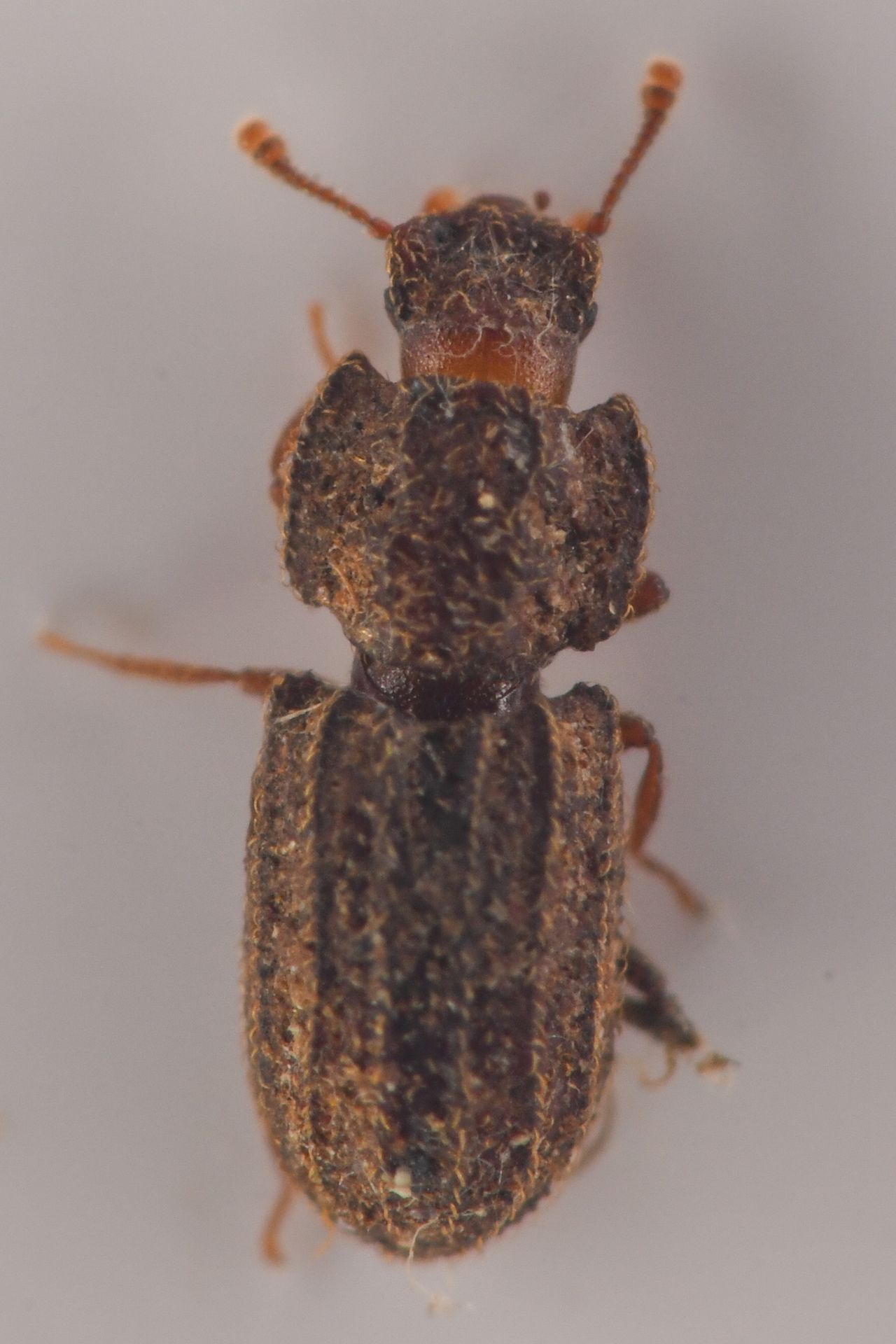
2Megataphrus is a of cylindrical bark beetles in the Zopheridae, established by Casey in 1890. The genus contains at least three described distributed in North America: M. arizonicus, M. chandleri, and M. tenuicornis. As members of the Colydiinae, these beetles are associated with dead or decaying wood .
Pronunciation
How to pronounce Megataphrus: /mɛˌɡəˈtæfrəs/
These audio files are automatically generated. While they are not always 100% accurate, they are a good starting point.
Identification
Megataphrus are distinguished from other colydiine beetles by their cylindrical body form, a characteristic of the group commonly called cylindrical bark beetles. The is placed in tribe Synchitini. Specific diagnostic features for species-level identification require examination of antennal structure and other subtle morphological characters; M. tenuicornis is notably named for its slender .
Images
Habitat
Megataphrus inhabit environments associated with dead and decaying wood, consistent with their classification as cylindrical bark beetles (Colydiinae).
Distribution
The occurs in North America. Megataphrus tenuicornis has been recorded from the United States, while M. arizonicus is documented from Arizona, and M. chandleri is known from the southwestern United States.
Ecological Role
As members of the Colydiinae, Megataphrus likely contribute to the decomposition of dead wood and associated fungal , though specific ecological roles have not been documented.
Similar Taxa
- Other Colydiinae generaMegataphrus can be distinguished from related in tribe Synchitini by specific combinations of morphological characters, particularly antennal and pronotal features, though precise distinguishing characters require taxonomic knowledge.
More Details
Taxonomic history
The was established by Casey in 1890 with M. tenuicornis as the type . Two additional species were described by Stephan in 1989: M. arizonicus and M. chandleri. The genus has received limited taxonomic or ecological study since its description.