
Eustrophopsis
Champion, 1889
Species Guides
6Eustrophopsis is a of polypore fungus beetles in the Tetratomidae, containing approximately seven described . These beetles are associated with fungal , specifically polypore fungi growing on decaying wood. The genus was established by Champion in 1889 and represents one of several lineages within the Eustrophinae adapted to .
Pronunciation
How to pronounce Eustrophopsis: /juː.strəˈfɑp.sɪs/
These audio files are automatically generated. While they are not always 100% accurate, they are a good starting point.
Identification
Eustrophopsis can be distinguished from related in Tetratomidae by characters of the , pronotal shape, and elytral . Within the Eustrophinae, they may be separated from Eustrophus and other genera by subtle differences in antennal segment proportions and the form of the pronotal hind angles. Species-level identification requires examination of male genitalia and fine details of elytral punctation and color pattern. Specimens are most reliably identified by comparison with type material or authoritative revisions.
Images
Appearance
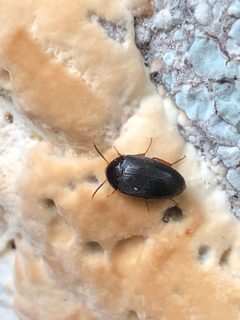
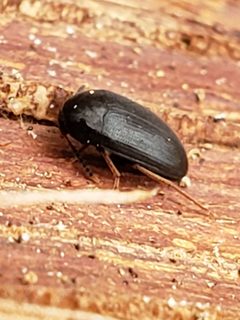
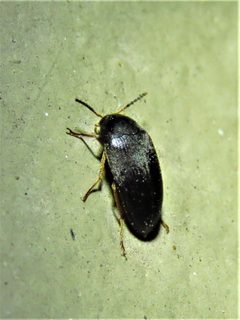
Members of this are small to medium-sized beetles with elongated, somewhat parallel-sided bodies. The are generally smooth or finely punctured, often with distinct color patterns that may include dark and light markings. are to slightly serrate, not strongly clubbed. The overall body form is characteristic of Tetratomidae, with a somewhat flattened profile adapted for moving under bark and among fungal brackets.
Habitat
Found in association with polypore fungi (Basidiomycota: Polyporales) growing on dead and decaying hardwood logs and stumps. include mature and old-growth forests with abundant coarse woody debris. Beetles occur directly on fungal fruiting bodies, under bark, and in the immediate vicinity of fungal growth on wood substrates.
Distribution
Recorded from North America, with distribution records including the northeastern United States (Vermont) and broader United States range. The full extent of the distribution requires further documentation, but it appears centered in eastern and possibly central North American forest regions.
Seasonality
activity likely coincides with the presence of mature polypore fruiting bodies, which are most abundant from late spring through autumn. Specific seasonal patterns for individual are not well documented.
Diet
Fungivorous, feeding on polypore fungi. Larval and stages are associated with fungal tissue of wood-decaying polypores.
Host Associations
- Polyporales - foodpolypore fungi
Behavior
and larvae inhabit polypore fungal fruiting bodies on decaying wood. Likely or in activity, remaining concealed within fungal brackets or under bark during daylight hours. Movement between fungal substrates probably occurs during periods of high humidity.
Ecological Role
Contributes to nutrient cycling in forest through consumption of fungal . As a fungivore, it helps regulate polypore fungal and participates in the decomposition of coarse woody debris. May serve as prey for other forest-dwelling .
Human Relevance
No direct economic importance. Of interest to coleopterists and forest ecologists studying fungal- relationships. Presence may indicate mature forest conditions with substantial dead wood and fungal diversity.
Similar Taxa
- EustrophusAlso in Eustrophinae and associated with polypore fungi; differs in antennal structure and pronotal
- TetratomaIn Tetratomidae but in Tetratominae; differs in association and body form
- HallomenusRelated tetratomid with similar fungivorous habits; differs in details of antennal and tarsal structure
More Details
Taxonomic history
The was established by George Champion in 1889 based on Central and North American material. The number of included has been revised over time, with approximately seven species currently recognized. The genus is nested within the Eustrophinae, a group of Tetratomidae specialized for life with polypore fungi.
Conservation considerations
As a of old-forest fungal , Eustrophopsis may be sensitive to forest management practices that reduce coarse woody debris and old-growth structural characteristics. No formal conservation assessments are available.