
Eustrophinae
Gistel, 1848
Tribe Guides
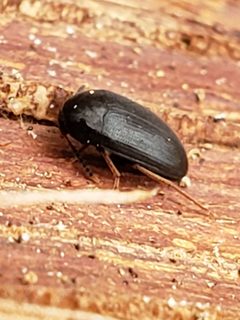
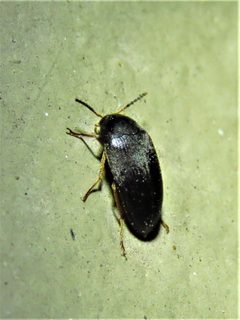
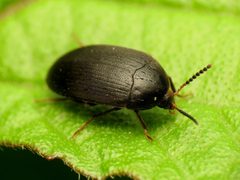
2Eustrophinae is a of beetles within the Tetratomidae, established by Gistel in 1848. These beetles are part of the superfamily Tenebrionoidea and are characterized by their association with fungal . The subfamily includes such as Eustrophus and Pseudoholostrophus. Members are small to medium-sized beetles with relatively uniform across the group.
Pronunciation
How to pronounce Eustrophinae: /juːˈstrɒfɪniː/
These audio files are automatically generated. While they are not always 100% accurate, they are a good starting point.
Identification
Eustrophinae can be distinguished from other Tetratomidae by the combination of to weakly serrate and the 5-5-4 tarsal formula. Within the subfamily, are separated primarily by antennal structure (degree of serration), pronotal shape, and elytral patterns. Eustrophus typically have more distinctly serrate antennae compared to Pseudoholostrophus. Examination of genitalia is often necessary for definitive species identification.
Images
Habitat
Primarily associated with decaying wood and fungal fruiting bodies, especially polypore fungi (Basidiomycota). Found in mature forests with abundant dead wood and fungal growth. Often collected directly from the undersides of bracket fungi or in wood-decay situations where fungi are present. Moist, shaded environments with substantial woody debris are preferred.
Distribution
Holarctic distribution, with primary diversity in North America and Eurasia. Present across temperate regions of the Northern Hemisphere. Records extend from forests through temperate zones, with some reaching into montane regions. Absent from tropical regions and the Southern Hemisphere.
Seasonality
are active primarily from late spring through early autumn (May–September in temperate regions). Peak activity coincides with fungal fruiting periods. likely occurs as adults in protected situations, though specific documentation is limited.
Host Associations
- Polyporaceae - and larvae associated with fruiting bodies of polypore fungi.
Behavior
are often found in on fungal fruiting bodies. When disturbed, they may drop from fungi and feign death. capability is present but these beetles are more commonly encountered by direct examination of fungal substrates rather than by passive collecting methods.
Ecological Role
Decomposers associated with fungal decay systems. Their specific ecological functions remain poorly documented, but they are part of the of organisms utilizing decaying wood and fungal resources. Likely prey for small in forest floor .
Human Relevance
No direct economic importance. Occasionally collected by enthusiasts and mycophagous beetle researchers. Presence can indicate mature forest conditions with intact fungal . Not considered a pest or beneficial in agricultural or forestry contexts.
Similar Taxa
- TetratominaeOther of Tetratomidae; distinguished by different antennal structure and tarsal formula (often 5-5-4 but with different antennal club development).
- Mycetophagidae of similar fungus-associated beetles; distinguished by different body form, antennal insertion, and often different tarsal structure.
- Ciidae of minute tree-fungus beetles; generally smaller, more compact body form, and different antennal structure.
More Details
Taxonomic History
Eustrophinae has undergone various taxonomic treatments, with some authors historically treating component as part of other (including Melandryidae). Current classification places it firmly within Tetratomidae based on larval and . The contains approximately 5-6 genera and 30-40 described , though this remains somewhat fluid with ongoing revisions.
Collection Methods
Best collected by direct examination of polypore fungi on standing and fallen dead wood. Berlese extraction of decaying wood and fungal material can also yield specimens. Specimens should be preserved dry for morphological study; molecular-grade preservation requires fresh material.