
Uloma longula
LeConte, 1861
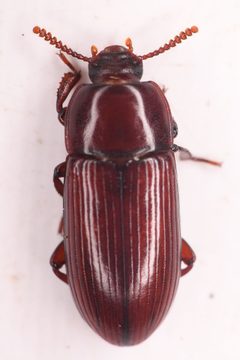
Uloma longula is a of darkling beetle (Tenebrionidae) described by LeConte in 1861. The species is documented from British Columbia, Canada, with limited observational records. As a member of the Uloma, it belongs to a group of small to medium-sized beetles associated with decaying wood and forest floor . Published biological information for this species remains sparse.
Pronunciation
How to pronounce Uloma longula: //juˈloʊmə ˈlɒŋɡjʊlə//
These audio files are automatically generated. While they are not always 100% accurate, they are a good starting point.
Identification
Uloma longula can be distinguished from other Uloma by its elongated body form, as suggested by the specific epithet 'longula' (diminutive of 'longus'). Within the Uloma, species identification generally requires examination of elytral , antennal club structure, and male genitalia. Detailed diagnostic features for U. longula specifically have not been compiled in readily accessible literature.
Images
Distribution
Recorded from British Columbia, Canada. The appears to have a restricted or poorly documented range within western North America.
Similar Taxa
- Uloma impressaOverlaps in western North American distribution; both are small darkling beetles requiring careful examination of elytral punctation and body proportions for separation.
- Uloma culinarisEuropean sometimes referenced in North American literature; U. longula is distinguished by geographic distribution and subtle morphological differences in antennal structure.
More Details
Taxonomic note
The Uloma has undergone taxonomic revision, with many North American historically placed in related genera. The current placement of U. longula in Uloma sensu stricto should be verified against recent phylogenetic treatments of Tenebrionidae.