
Rhipidandrus
J.L. LeConte, 1862
Species Guides
2- Rhipidandrus paradoxus(Eastern Rhipidandrus)
- Rhipidandrus peninsularis(Southwestern Rhipidandrus)
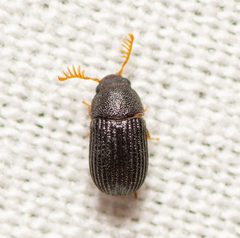
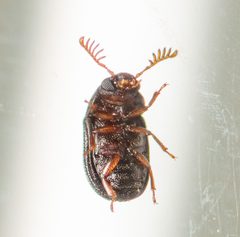
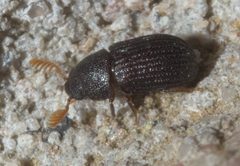
Rhipidandrus is a of darkling beetles ( Tenebrionidae) established by J.L. LeConte in 1862. It belongs to the tribe Bolitophagini within the Tenebrioninae. The genus is native to the Americas, with confirmed records from Colombia. As a member of the Bolitophagini, in this genus are likely associated with decaying wood and fungal , though specific ecological details remain poorly documented.
Pronunciation
How to pronounce Rhipidandrus: /ˌrɪpɪˈdændrəs/
These audio files are automatically generated. While they are not always 100% accurate, they are a good starting point.
Identification
Members of Rhipidandrus can be distinguished from related Bolitophagini by the combination of: antennal structure with a distinct, often serrate or (fan-like) club (the genus name derives from Greek 'rhipis' meaning fan and 'andros' meaning male, likely referring to male ); body form generally elongate and somewhat flattened; and pronotal shape typically broader than long with distinct lateral margins. Exact -level identification requires examination of male genitalia and detailed antennal .
Images
Distribution
Colombia (confirmed). The is likely more broadly distributed in South America based on tribal , but published records are sparse.
Ecological Role
As members of the Bolitophagini tribe, in this likely function as decomposers in forest , contributing to the breakdown of decaying wood and associated fungal .
Similar Taxa
- BolitophagusAlso in tribe Bolitophagini; Rhipidandrus differs in antennal club structure and male-specific modifications
- EledonaShares tribe Bolitophagini; Rhipidandrus is distinguished by body proportions and antennal
- CorticeusSimilar flattened body form but in tribe Corticeini; Rhipidandrus has distinct antennal club and different pronotal structure
More Details
Etymology
The name combines Greek 'rhipis' (ῥιπίς) meaning 'fan' and 'andros' (ἀνδρός) meaning 'of man/male', likely referring to the fan-like () found in males of some .
Taxonomic History
Established by John Lawrence LeConte in 1862, a prolific American entomologist who described numerous North and South American . The genus has remained relatively obscure with limited modern taxonomic revision.