
Bolitophagini
W. Kirby, 1837
Genus Guides
5- Bolitophagus
- Bolitotherus(horned fungus beetle)
- Eleates
- Megeleates
- Rhipidandrus
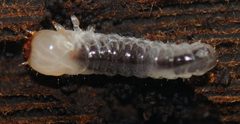
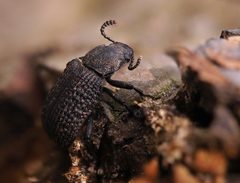
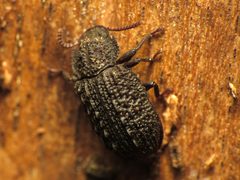
Bolitophagini is a tribe of darkling beetles ( Tenebrionidae) comprising more than 20 . The tribe is named after its type genus Bolitophagus, whose name derives from Greek meaning 'fungus-eater'. Members are primarily associated with forest and feed on fungi, particularly bracket fungi (polypores). The tribe has a fossil record extending to the Eocene, indicating long-term persistence in forest .
Pronunciation
How to pronounce Bolitophagini: /bɒlɪtoʊfəˈgaɪnaɪ/
These audio files are automatically generated. While they are not always 100% accurate, they are a good starting point.
Identification
of Bolitophagini are generally robust, convex-bodied darkling beetles. The tribe is distinguished from related tenebrionid tribes primarily by larval and adult morphological characters including details of antennal structure, tarsal formula, and male genitalia. Generic-level identification requires examination of these structural features; identification often relies on subtle differences in body proportions, surface , and genitalic .
Images
Habitat
Old-growth forests and mature woodland . Members are specifically associated with decaying wood and fungal fruiting bodies. The fossil Eledonoprius has been associated with old-growth forest since at least the Eocene.
Distribution
Widespread in the Northern Hemisphere with records from the Western Palaearctic (Europe), Eastern Palaearctic (Korea, Japan), and fossil evidence from Baltic amber indicating historical presence in northern Europe since the Eocene.
Diet
Fungivorous, feeding on fungal fruiting bodies. The type name Bolitophagus and tribe etymology explicitly reference fungus-feeding. Specific associations include bracket fungi (polypores) in the genus Boletoxenus, though detailed host records for most genera remain limited.
Behavior
and larvae are associated with fungal fruiting bodies on decaying wood. is presumed to include feeding on fungal tissue and breeding in or near fungal substrates, though specific behavioral observations are sparse in published literature.
Ecological Role
Fungivores that contribute to nutrient cycling in forest by consuming fungal fruiting bodies and potentially facilitating spore through movement between fungal substrates.
Human Relevance
Minimal direct economic importance. Some may serve as indicators of old-growth forest continuity due to their specific ecological requirements.
Similar Taxa
- TenebrioniniAnother tribe in Tenebrioninae; Bolitophagini distinguished by fungivorous and associated morphological adaptations for life on fungal substrates versus the generally detritivorous or granivorous habits of many Tenebrionini
- CryptochiliniTribe of Tenebrioninae also associated with decaying wood and fungi; separation requires detailed examination of mouthpart structure, antennal club form, and male genitalia
More Details
Fossil record
The tribe has a documented fossil history: Eledonoprius incoronatus from Eocene Baltic amber represents the first confirmed fossil member, indicating that at least some lineages within Bolitophagini have persisted in Western Palaearctic forest for approximately 50 million years.
Taxonomic history
Established by W. Kirby in 1837 with Bolitophagus as type . The tribe has undergone periodic revision, with modern treatments recognizing more than 20 genera distributed primarily across the Holarctic region.
Sources and further reading
- BugGuide
- Wikipedia
- iNaturalist taxon
- Catalogue of Life
- Taxonomic review of the tribe Bolitophagini in Korea (Coleoptera: Tenebrionidae: Tenebrioninae)
- Taxonomic Review of the Fungivorous Tenebrionid Boletoxenus Motschulsky, 1858 (Coleoptera: Tenebrionidae: Tenebrioninae: Bolitophagini) in Korea with Host Fungi
- A new fossil species of Bolitophagini (Coleoptera: Tenebrionidae) from Baltic amber suggests the genus Eledonoprius Reitter is persistent in the Western Palaearctic since the Tertiary