
Coelocnemis punctata
LeConte, 1854
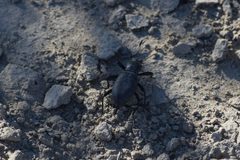
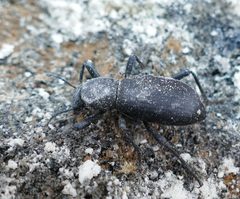
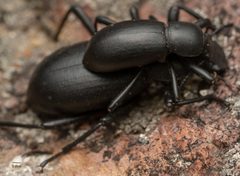
Coelocnemis punctata is a darkling beetle in the Tenebrionidae, one of seven in the Coelocnemis found in western North America and adjacent southern Canada. The genus is characterized by distinct parallel lines of yellow on the inner surface of the tibiae, a feature used to distinguish it from the superficially similar genus Eleodes. are flightless, with that reduce water loss, and are typically associated with pine forests and oak-conifer woodlands rather than desert .
Pronunciation
How to pronounce Coelocnemis punctata: //sɛ.lɔːkˈnɛ.mɪs pʌŋkˈtɑː.tə//
These audio files are automatically generated. While they are not always 100% accurate, they are a good starting point.
Identification
Coelocnemis punctata can be distinguished from the similar Eleodes by the presence of distinct, parallel lines of yellow on the inner surface of the tibiae—Eleodes lacks this feature. The pronotum is generally broader and more angular than in Eleodes. Both genera are flightless with and exhibit defensive headstand , so behavior alone is not diagnostic.
Images
Habitat
Pine forest and oak-conifer woodlands; typically found in or under rotten logs. Unlike Eleodes, which is more characteristic of barren desert , Coelocnemis are associated with forested environments.
Distribution
Western United States and adjacent southern Canada. Specific distribution details for C. punctata are not well documented beyond the general range of the .
Seasonality
are active during cooler periods, wandering at night to avoid desiccation and overheating. Hibernates in small groups in dry, protected .
Diet
feed on plant detritus, lichens, fungi, and seeds.
Life Cycle
Larvae resemble large but are distinguished by a pair of hook-like prongs at the rear, accompanied by smaller teeth behind the prongs. can live at least three years.
Behavior
wanderer, active in cool conditions to prevent water loss and overheating. Performs defensive headstand when threatened, secreting smelly defensive chemicals from abdominal glands. Hibernates in small groups in dry, protected locations.
Ecological Role
Decomposer; feeds on plant detritus and fungi, contributing to nutrient cycling in forest .
Human Relevance
None documented. Not a pest .
Similar Taxa
- EleodesSuperficially similar large black darkling beetles, but Eleodes lacks the parallel lines of yellow on the inner tibiae and is more typical of barren desert rather than pine-oak woodlands.