
Coelocnemis dilaticollis
Mannerheim, 1843
California Broad-necked Darkling Beetle
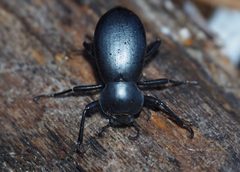
Coelocnemis dilaticollis is a large, flightless darkling beetle found in western North America. The inhabits pine forests and oak-conifer woodlands, where it is typically encountered in or under rotten logs. are and active during cooler periods to avoid desiccation. The species can be distinguished from similar darkling beetles by its broad, angular pronotum and distinctive yellow pubescent lines on the inner surface of the tibiae.

Pronunciation
How to pronounce Coelocnemis dilaticollis: //ˌsiːloʊˈknɛmɪs ˌdaɪlətəˈkɒlɪs//
These audio files are automatically generated. While they are not always 100% accurate, they are a good starting point.
Identification
Distinguished from the superficially similar Eleodes by two key characters: the pronotum is broader and more angular, and the inner surface of each tibia bears distinct parallel lines of yellow (the "hollow shin" feature referenced by the genus name). Eleodes lacks these tibial hair lines. Like other Coelocnemis, C. dilaticollis is flightless with that reduce water loss. The is among the larger darkling beetles in its range.
Images
Habitat
Pine forest and oak-conifer woodlands. Typically found in or under rotten logs.
Distribution
Western United States and western Canada. Specific records from Alberta and British Columbia, Canada.
Behavior
Nocturnally active, wandering during cool periods to prevent overheating and desiccation. Performs defensive "headstand" posture when threatened, elevating the to direct defensive secretions toward potential . Secretes smelly defensive chemicals from abdominal glands. hibernate in small groups in dry, protected .
Similar Taxa
- EleodesLarge black flightless darkling beetles with similar body form and defensive headstand ; distinguished by narrower, less angular pronotum and absence of yellow tibial lines.
- Coelocnemis sulcataCongeneric with similar preferences (pine forest tenebrionids found on tree trunks at night); distinguished by specific morphological characters of the pronotum and .