
Statira gagatina
Melsheimer, 1845
Coal Darkling Beetle
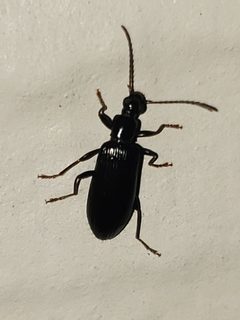
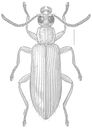
Statira gagatina is a small darkling beetle in the Tenebrionidae, specifically placed in the Lagriinae (formerly treated as family Lagriidae). It is one of approximately 50 in the Statira, which are distributed primarily in North America. The species is characterized by its elongate body form and long-jointed that distinguish it from more typical darkling beetles. The 'Coal Darkling Beetle' likely refers to its dark coloration.
Pronunciation
How to pronounce Statira gagatina: //stəˈtaɪrə ɡəˈɡætɪnə//
These audio files are automatically generated. While they are not always 100% accurate, they are a good starting point.
Identification
Statira gagatina belongs to a group formerly known as 'long-jointed beetles' ( Lagriidae), now Lagriinae within Tenebrionidae. Unlike classic darkling beetles in the subfamily Tenebrioninae, Lagriinae have with longer segments that may approach the thread-like form of ground beetles. The are concealed beneath the , distinguishing them from predatory ground beetles (Carabidae) which have exposed, forward-directed jaws. -level identification within Statira requires examination of fine structural details, potentially including genitalia dissection.
Images
Distribution
Recorded from Québec, Canada. The Statira is primarily North American in distribution.
Similar Taxa
- Ground beetles (Carabidae)Lagriinae have with longer segments that may resemble the thread-like antennae of ground beetles, but differ in having concealed and lacking the rapid running typical of carabids.
- Classic darkling beetles (Tenebrioninae: Eleodes, etc.)Statira lacks the bead-like segments and robust body form typical of many Tenebrioninae; it does not exhibit the -standing defensive characteristic of Eleodes.
More Details
Taxonomic History
The Statira was historically placed in the Lagriidae, which has been reclassified as the Lagriinae within Tenebrionidae. This taxonomic change reflects phylogenetic relationships but means that older literature may refer to these beetles as 'long-jointed beetles' in a separate family context.
Morphological Distinctiveness
Lagriinae, including Statira, represent an aberrant lineage of darkling beetles that challenge the 'typical' darkling beetle stereotype. Their elongate bodies and longer antennal segments can lead to misidentification with other .