
Diaperis
Geoffroy, 1762
Species Guides
4- Diaperis californica
- Diaperis maculata(Two-spotted Diaperis)
- Diaperis nigronotata(Five-spotted Diaperis)
- Diaperis rufipes
Diaperis is a of darkling beetles in the Tenebrionidae, established by Geoffroy in 1762. occur across Asia, Europe, and the Americas. The genus includes mycophagous species such as D. boleti, which feeds on wood-decomposing fungi. Some species were formerly classified under the genus Allophasia.
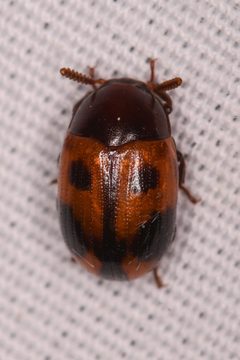
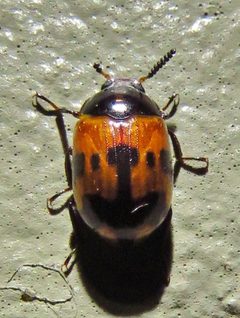
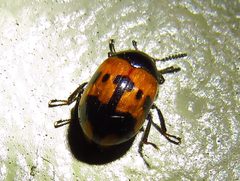
Pronunciation
How to pronounce Diaperis: //diˈapɛrɪs//
These audio files are automatically generated. While they are not always 100% accurate, they are a good starting point.
Images
Habitat
Arboricolous including pine forests, deciduous forests, floodplain forests, and forest edges. Associated with wood-decomposing polypore fungi on living or dying trees.
Distribution
Asia, Europe, and the Americas. Documented from Slovakia, Denmark, Norway, and the United States (Vermont).
Diet
Mycophagous. At least one , D. boleti, feeds on wood-decomposing polypore fungi including Fomitopsis betulina, Laetiporus sulphureus, and Cerioporus squamosus.
Host Associations
- Fomitopsis betulina - food sourcePolypore fungus on which D. boleti feeds
- Laetiporus sulphureus - food sourcePolypore fungus on which D. boleti feeds
- Cerioporus squamosus - food sourcePolypore fungus on which D. boleti feeds
- Betula sp. - tree for associated fungi
- Cerasus avium - tree for associated fungi
- Salix sp. - tree for associated fungi
- Populus sp. - tree for associated fungi
- Acer sp. - tree for associated fungi
Behavior
Infests polypore fungi. Serves as specific phoretic for the mite Lasioseius boleti.
Ecological Role
Mycophagous consumer of wood-decomposing fungi; for phoretic mites.
Similar Taxa
- AllophasiaSome Diaperis were formerly placed in this ; taxonomic distinction requires examination of historical literature.
- SerraniaThe formerly described as Diaperis viridula is now classified as Serrania viridula, indicating historical confusion between these .
More Details
Taxonomic History
Some were formerly placed in the Allophasia. A species described in this genus, now Serrania viridula (Zayas, 1989), has been reclassified.
Mite Associations
Diaperis boleti serves as the specific phoretic for the blattisociid mite Lasioseius boleti sp. nov., described from Slovakia in 2020.