
Alphitophagus
Stephens, 1832
Species Guides
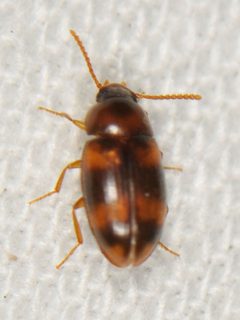
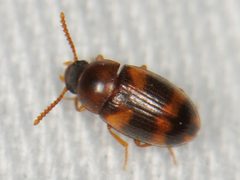
1- Alphitophagus bifasciatus(Two-banded fungus beetle)
Alphitophagus is a of darkling beetles (Tenebrionidae) established by Stephens in 1832. The genus has an almost distribution. The best-known , A. bifasciatus, is a cosmopolitan pest of stored products and serves as an intermediate for the poultry cestode Raillietina cesticillus. A. obtusangulus, described from Croatia in 1904, was recently recorded from France and Greece.
Pronunciation
How to pronounce Alphitophagus: /ælˈfɪtoʊfəˌɡəs/
These audio files are automatically generated. While they are not always 100% accurate, they are a good starting point.
Identification
A. obtusangulus can be distinguished from the similar A. bifasciatus using morphological characters detailed in illustrated dichotomous keys; the former was overlooked in collections due to confusion with the latter.
Images
Distribution
Almost . Documented from: France, Greece, Croatia (type locality of A. obtusangulus: Mljet island), Denmark, Norway, Sweden.
Host Associations
- Raillietina cesticillus - intermediate A. bifasciatus harbors cysticercoids in the ; when ingested by chickens, the develops to maturity
- Gallus gallus domesticus - definitive of chickens acquire Raillietina cesticillus by consuming infected beetles
Ecological Role
A. bifasciatus acts as an intermediate facilitating transmission of the cestode Raillietina cesticillus to poultry.
Human Relevance
A. bifasciatus is a pest of stored products. It has veterinary significance as an intermediate for Raillietina cesticillus, a cestode of chickens.
Similar Taxa
- Alphitophagus obtusangulus / A. bifasciatusFrequently confused in collections; A. obtusangulus specimens were found mixed among A. bifasciatus in museum collections, requiring illustrated keys for proper separation.